Updated
When Sickness Strikes: What Should You Do?
A God-first, medically responsible guide to seeking care, accepting support, praying honestly, and staying spiritually grounded when sickness interrupts life.
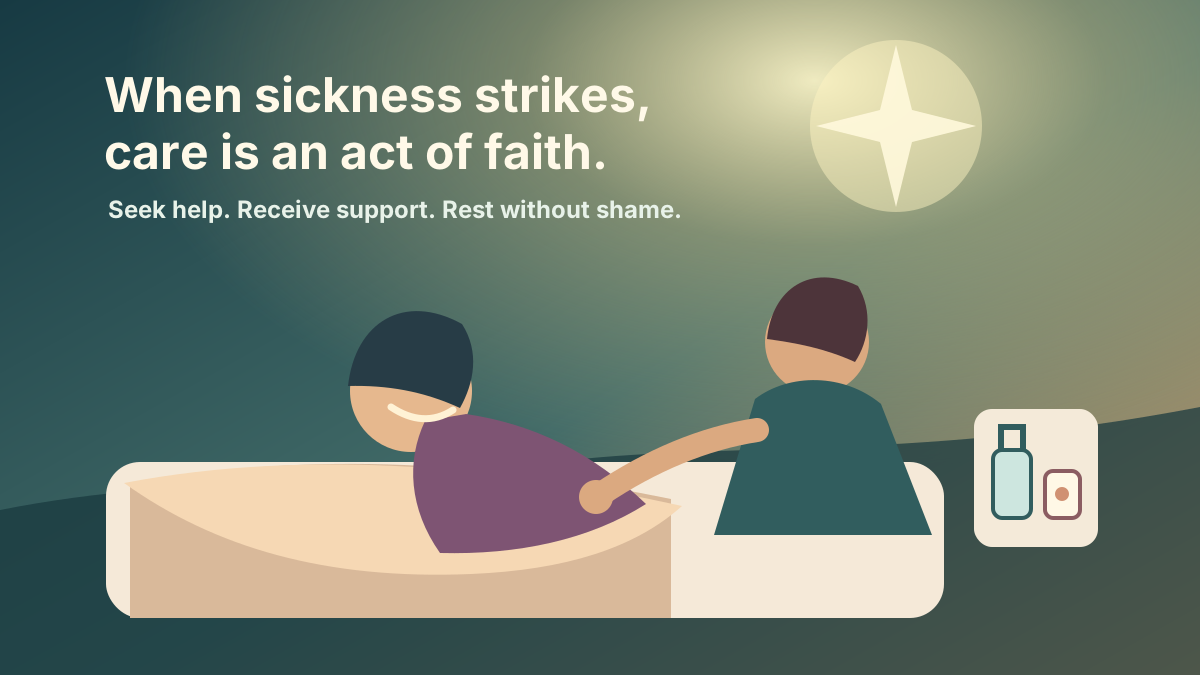
Guide
9 min read
Sickness changes the size of the world
When sickness strikes, the world can suddenly become very small. Plans disappear. A normal morning becomes a temperature, a test result, a waiting room, a medicine schedule, or the distance between the bed and the next glass of water. Things that seemed urgent yesterday may no longer matter today.
The first task is not to force a spiritual explanation. The first task is to meet reality. Your body is asking for attention. Give it attention without panic, denial, shame, or the need to appear stronger than you are.
First, know when to seek immediate help
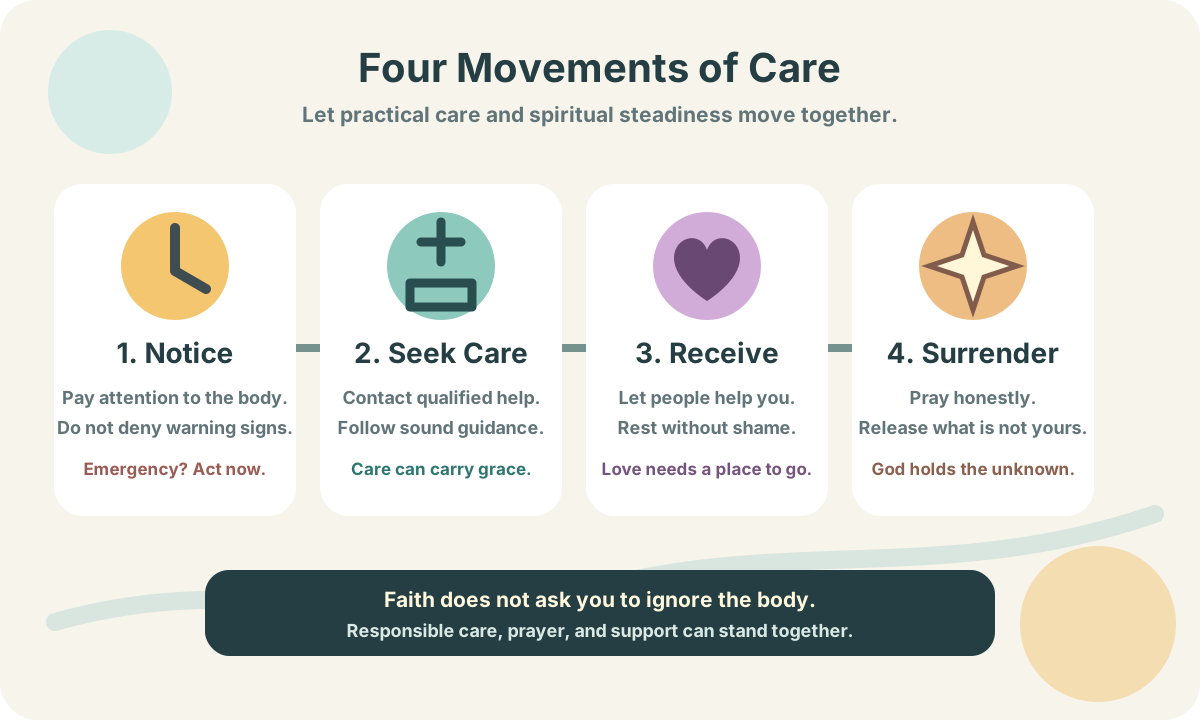
Some symptoms should not be watched in silence. Severe difficulty breathing, chest pain, sudden confusion, fainting, uncontrolled bleeding, sudden severe pain, or other rapidly worsening symptoms can be medical emergencies. Contact local emergency services or go to an emergency department. Do not wait for a card, a sign, a dream, or a feeling to give permission.
For symptoms that are not immediately life-threatening but are concerning, persistent, or getting worse, contact a qualified healthcare professional. Describe what began, when it began, what has changed, and what medicines or health conditions may be relevant. You do not have to solve the mystery before asking for help.
Medical care and faith are not enemies
Some people quietly fear that going to a doctor means their prayer was not strong enough. That idea creates unnecessary guilt. Seeking care is not spiritual defeat. It is stewardship. A physician's training, a nurse's attention, a laboratory result, a treatment, and the hands of a caregiver may all become channels through which help reaches you.
Follow professional guidance and take medicine as directed. Ask what the medicine is for, how to use it, what side effects require a call, and what follow-up is needed. Do not borrow prescriptions, use leftover antibiotics, or change treatment because an unqualified person sounds confident. Wisdom includes knowing whose knowledge is relevant.
Do not turn sickness into a verdict
Illness is not reliable proof that God is punishing you, that you attracted the wrong energy, or that you failed spiritually. Bodies are vulnerable. We live in an imperfect world of infection, injury, genetics, age, stress, environment, chance, and limits. Not every sickness arrives with a hidden moral accusation.
There may be lessons inside illness, but that does not mean the illness was sent as a lesson in a simple or cruel way. Meaning often grows slowly through how we respond: with humility, honesty, patience, better priorities, compassion for other people, and a deeper respect for the body we once took for granted.
Let the body set a different pace
Sickness asks for a temporary surrender of speed. Rest may feel unproductive, especially if you are used to proving your value through work, care for others, or constant availability. Yet the body does not heal according to pride. It follows its own rhythm.
Cancel what can be cancelled. Eat, drink, move, and sleep according to appropriate medical guidance. Keep simple notes about symptoms and questions if that helps you communicate with your care team. Recovery is work even when it looks like stillness.
Allow other people to carry something
Sickness exposes how much we depend on one another. Let someone bring food, drive you to an appointment, collect medicine, sit nearby, care for a child, or send the message you do not have the strength to write. Receiving help does not make you a burden. It gives love somewhere practical to go.
Be specific when you can. Instead of saying, I need help, say, could you take me to this appointment, call me tonight, or bring one meal? If you are supporting someone who is sick, do not force optimism. Offer presence, practical help, and respect for what the person says they need.
Care for the mind that lives inside the sick body
Illness can bring fear, anger, loneliness, grief, helplessness, and uncertainty. These reactions do not mean you lack faith. They mean something precious feels threatened. Speak honestly with someone trustworthy. If anxiety, depression, or despair becomes difficult to carry, seek qualified mental health support as part of your care.
Try not to spend every waking hour searching symptoms or reading the most frightening possible outcomes. Information can prepare you, but endless searching can feed panic. Let your medical team answer medical questions. Give the mind periods where it is allowed to rest from the identity of being sick.
Pray for healing, but also pray for presence
It is natural to pray, please make this go away. Pray that prayer. Ask boldly for healing. But do not let it be the only prayer. Also ask: give me the right help; reveal what needs attention; steady the people caring for me; protect me from fear; teach me how to receive love; help me live this day faithfully.
Prayer is not a bargain in which perfect belief purchases a perfect body. Prayer is relationship. It is the place where fear can speak without pretending, where hope can remain without making promises, and where what you cannot control can be returned to God.
Keep tarot in its proper place
Tarot must never be used to diagnose an illness, decide whether symptoms are serious, choose a treatment, change medication, or predict recovery. Those are medical matters. A beautiful card cannot examine the body, interpret a laboratory result, or replace a qualified professional.
If you use tarot during sickness, use it only for reflection. Ask: What emotion needs gentleness today? Where am I resisting support? What can I surrender? What small act of care is mine to take? The Four of Swords may mirror rest. Strength may speak of patient courage. Temperance may reflect balance and measured care. The cards remain mirrors; God remains the Source, and medical decisions remain with qualified care.
Healing is not always a straight line
A better day followed by a difficult day does not necessarily mean all progress is lost. Recovery can move unevenly. Chronic illness may require learning a new rhythm rather than returning to an old one. Sometimes healing means cure. Sometimes it means management, adaptation, relief, acceptance, or being faithfully accompanied through what cannot yet be changed.
Do not measure your worth by the speed of recovery. Do not compare your body with someone else's story. Keep communicating with your care team, keep receiving appropriate help, and let hope become steady enough to live beside uncertainty.
A reflective closing
When sickness strikes, begin with what is real: seek urgent help when needed, get qualified care, follow sound guidance, rest without shame, accept support, tell the truth about fear, and place what you cannot control in God's hands. You do not need to choose between the practical and the spiritual. Responsible care can be an expression of faith.
Prayer-like affirmation: God of life and divine wisdom, guide me toward the care I need. Give skill to those who help me, patience to those who love me, and courage for the next honest step. Keep me from fear, denial, and false certainty. Let me receive medicine, rest, prayer, and human kindness with humility, while trusting You with what remains beyond my control.
A Grounded Response to Sickness
Sickness may require different levels of care. Let medical judgment guide treatment while faith helps you carry what cannot be controlled.
| When this happens | Grounded action | Spiritual reminder |
|---|---|---|
| Severe or sudden warning signs | Contact local emergency services or seek emergency care immediately. | Urgent medical help is not a failure of faith. It is responsible stewardship of life. |
| Symptoms are new, persistent, or worsening | Contact a qualified healthcare professional and describe the symptoms clearly. | You do not need to diagnose yourself before you deserve care. |
| A treatment plan is given | Follow it as directed and ask questions when anything is unclear. | Medicine, skill, and human knowledge can all be channels through which care arrives. |
| The body needs rest | Reduce unnecessary demands and let recovery change the pace of the day. | Rest is not laziness when the body is doing the work of healing. |
| Fear becomes overwhelming | Tell someone you trust and seek mental health support when needed. | Fear needs companionship and truth, not shame. |
| You turn to tarot | Ask reflective questions about emotions, support, patience, or meaning, never diagnosis or treatment. | Tarot may mirror the inner journey, but God and qualified medical care remain higher. |

Written by
Lucia Aurelia
Tarot educator and symbolic reflection writer
Lucia Aurelia writes about tarot as a reflective language for symbols, questions, journaling, and grounded spiritual practice.
Common Questions
When Sickness Strikes: What Should You Do? FAQ
What is the first thing I should do when sickness strikes?
First, notice whether there are emergency warning signs. Severe difficulty breathing, chest pain, sudden confusion, fainting, uncontrolled bleeding, or other sudden severe symptoms require immediate help from local emergency services. Otherwise, contact a qualified healthcare professional when symptoms are concerning, persistent, or worsening.
Does seeking medical treatment mean I do not trust God?
No. Seeking medical care is an act of responsibility, not a rejection of faith. Doctors, nurses, medicine, science, caregivers, and practical wisdom can all be part of the help available to you.
Can tarot tell me what illness I have or which treatment to choose?
No. Tarot should never diagnose illness, assess medical risk, choose medication, or replace qualified care. It may be used only as a reflective mirror for emotions, fears, support, patience, and the spiritual meaning you are making from the experience.
How should I pray when I am sick?
Pray honestly. Ask for healing, but also ask for courage, wise care, clear decisions, patient support, and the grace to meet the present day without pretending you are not afraid.
More From The Blog
Continue reading tarot education.

8 min read
Hidden in Plain Sight: Tarot, Secrets, and Spiritual Discernment
Important truths are sometimes hidden by distraction, jokes, confusion, and devaluation. Learn how tarot can train discernment without becoming paranoid.
Read article
9 min read
Is God Real? Why an Imperfect World Does Not Disprove God
A spiritual reflection on why war, sickness, crime, and suffering do not automatically disprove God, and how polarity makes human experience possible.
Read articlePractice with one card
Ask a question, draw a card, and use the reading as the first entry in your tarot journal.