About Tarot Cards

Tarot Cards, Sacred Symbols, and the Art of Listening

Across history, humanity has asked how the Divine speaks: through scripture, dreams, visions, signs, conscience, nature, and symbols that arrive with strange timing. Tarot belongs to that old human hunger for meaning. Not as a replacement for faith, and not as a machine for certainty, but as a mirror of the soul's journey.

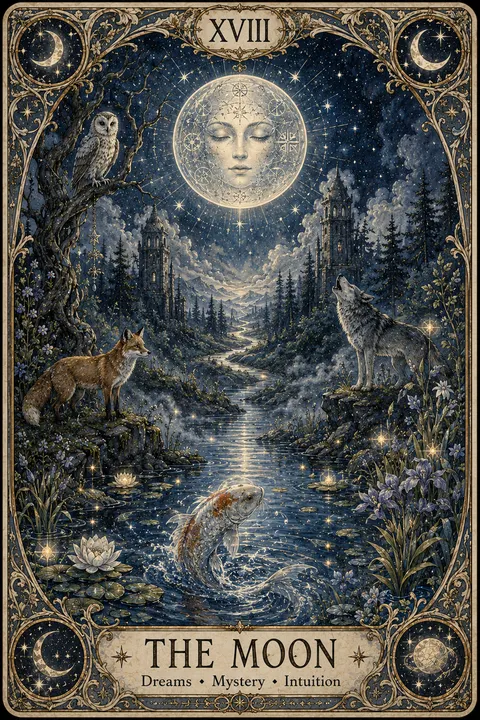
The Moon tarot card
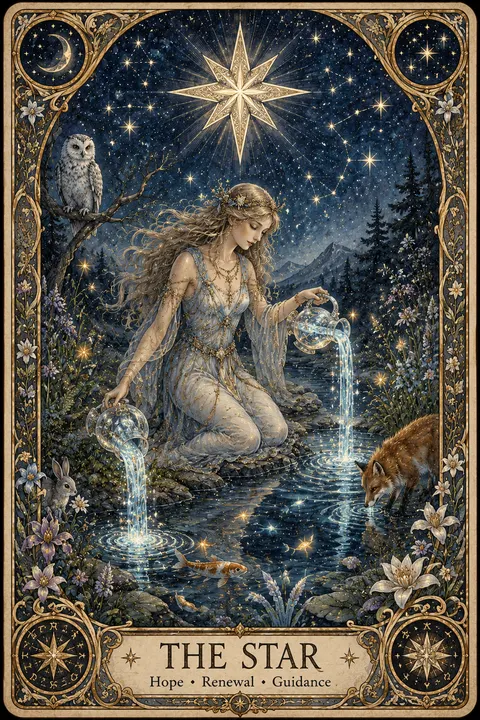
The Star tarot card
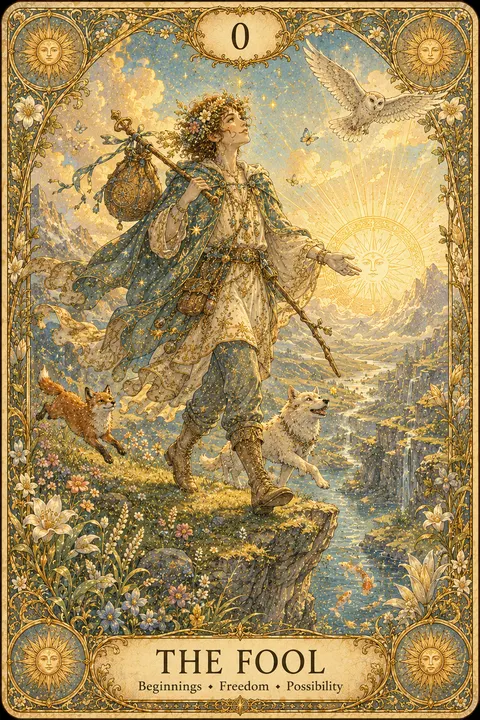
The Fool tarot card
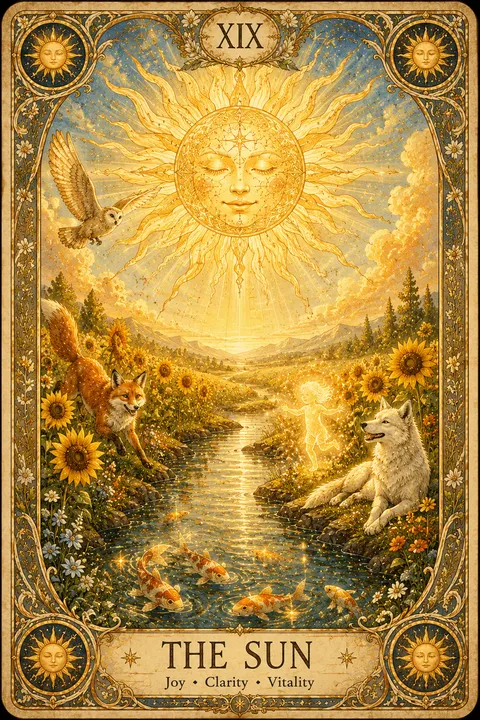
The Sun tarot card

Sacred Language

Tarot can be understood as reflection within a much older search for signs.

Sacred traditions are filled with communication that moves beyond ordinary language. Joseph received guidance through dreams. Moses met God in the burning bush. Ezekiel witnessed visions. Daniel interpreted mysterious messages. The Magi followed a star across the heavens.

Tarot can be viewed in this wider tradition of contemplation and meaning-making. It is not a substitute for scripture, prayer, wise counsel, or personal responsibility. It is not an oracle that controls the future. At its best, it is a symbolic room where the soul can notice what it already senses but has not yet named.

The Fool steps into the unknown. The Hermit carries a lamp into solitude. Death clears the old form so transformation can begin. Judgment awakens what has been sleeping. The World gathers the scattered path into completion. These are not only cards. They are thresholds every human being eventually crosses.

Just as parables reveal truth through story, tarot invites reflection through image. Perhaps the deeper question is not whether wisdom can reach us in unexpected ways, but whether we have learned how to listen when it does.

History

Tarot did not begin as prophecy. It became mystical over time.

The story is better when it is told honestly: first a game, then a luxury object, then an occult language, then a modern mirror.

Mid 1400s

Tarot begins as a game

The earliest tarot packs appear in northern Italy, where extra allegorical trump cards were added to ordinary four-suit playing cards. These were not originally self-help tools or fortune-telling cards. They were luxury game objects, used in trick-taking games and often made for wealthy families.
Renaissance Milan

The Visconti-Sforza cards become the great survivor

The best-known early tarot survivors are the hand-painted Visconti-Sforza family decks. They matter because they preserve the look of early tarot: gold grounds, courtly figures, virtues, triumphs, and images that feel half game, half illuminated manuscript.

1700s

The occult story arrives

In the late eighteenth century, French writers and card readers began attaching tarot to esoteric systems, ancient mysteries, astrology, and divination. This is when tarot's modern mystical reputation truly starts to glow.

1909

The Waite-Smith deck changes everything

Arthur Edward Waite and artist Pamela Colman Smith created the deck many modern readers still recognize today. Smith's illustrated scenes, especially in the Minor Arcana, made every card feel readable as a story rather than a plain suit symbol.

Today

Tarot becomes reflection, ritual, and creative language

Modern readers use tarot for spiritual practice, journaling, coaching prompts, decision reflection, art, fiction, meditation, and entertainment. The cards have become a shared symbolic language for people who want a more intuitive way to think.

How People Use Tarot

People use tarot when the visible world feels threaded with hidden meaning.

Self-reflection

A tarot card gives the mind an image to answer back to. Instead of asking, What do I think?, the card asks, What do I notice? That small shift can uncover emotion, hesitation, desire, or pattern.

Decision clarity

Tarot does not need to decide for you. It can separate the question into themes: fear, timing, opportunity, responsibility, attachment, and consequence.

Journaling and ritual

Many people pull a card in the morning, write from its imagery, and return to it at night. The ritual makes the day feel observed, named, and gently held.

Storytelling and art

The Fool, the Tower, Death, the Moon, and the Star are compact story engines. Writers, artists, designers, and musicians use tarot as a prompt deck for mood, conflict, transformation, and character.

Relationship reflection

A spread can help someone ask better questions about closeness, distance, repair, boundaries, and hope. Used well, it invites honesty instead of obsession.

Spiritual practice

For some readers, tarot is sacred. For others, it is psychological. The deck can hold both approaches because its power is image, sequence, archetype, and attention.

Symbol Layers

Tarot meaning is layered, not memorized flat.

A beginner may start with keywords. A deeper reading listens to the card's whole atmosphere: image, number, suit, placement, question, and emotional charge.

Surface · keywords

  1. Card family

    Major Arcana cards usually feel archetypal and large; Minor Arcana cards often feel practical, emotional, social, or situational.

  2. Suit

    Cups often speak through feeling, Swords through thought, Wands through energy, and Pentacles through the material world.

  3. Number

    Aces begin, twos mirror, threes grow, fours stabilize, fives disturb, sixes repair, sevens test, eights move, nines ripen, and tens complete.

  4. Position

    A card in the past position does different work than the same card in advice, obstacle, outcome, or hidden influence.

  5. Question

    The card responds to the frame. A vague question creates fog; a clean question gives the symbolism somewhere to land.

  6. Reversal

    A reversed card can point to delay, inwardness, blockage, excess, avoidance, or a meaning that needs gentler handling.

Depth · the whole atmosphere

Famous Stories

The famous tarot stories are less tabloid and more interesting.

Tarot history is full of survival, reinvention, misattribution, and images that refused to stay in one century.

The Visconti-Sforza cards

These fifteenth-century Milanese decks are not famous because of one shocking incident. They are famous because they survived. Their painted and gilded cards show tarot before the modern occult storyline, when the deck still belonged to elite game culture and Renaissance visual imagination.

The French occult turn

Writers such as Antoine Court de Gebelin and later Etteilla helped shift tarot from a game into a divinatory and esoteric system. Some of their historical claims are now treated cautiously, but their influence on tarot culture was enormous.

Pamela Colman Smith's overlooked authorship

The 1909 Waite-Smith deck is often casually called Rider-Waite after its publisher and writer. Yet Pamela Colman Smith's art made the deck iconic. Modern tarot culture increasingly restores her name because the images are the reason the deck became so usable and unforgettable.

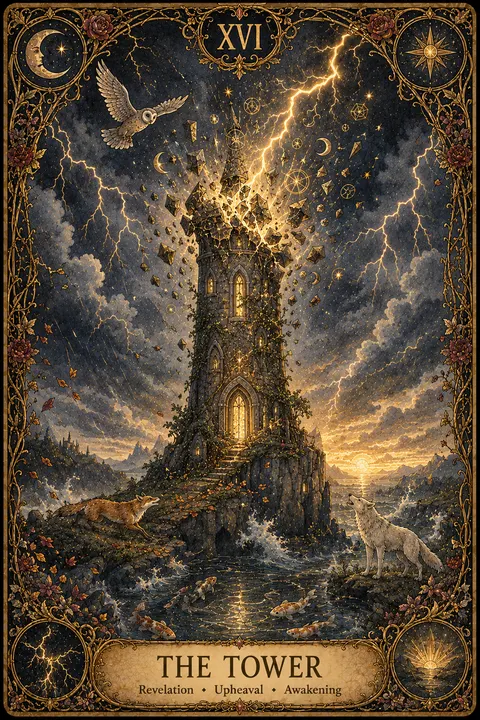
The Tower as cultural shorthand

The Tower became one of tarot's most dramatic images: lightning, collapse, revelation, and the end of false structures. It is now used far beyond card reading as a symbol for sudden truth and necessary disruption.

Card Gallery

Five cards that show tarot's dramatic range.

The Fool tarot card

The Fool

Beginnings, risk, innocence, trust, and the leap before certainty.

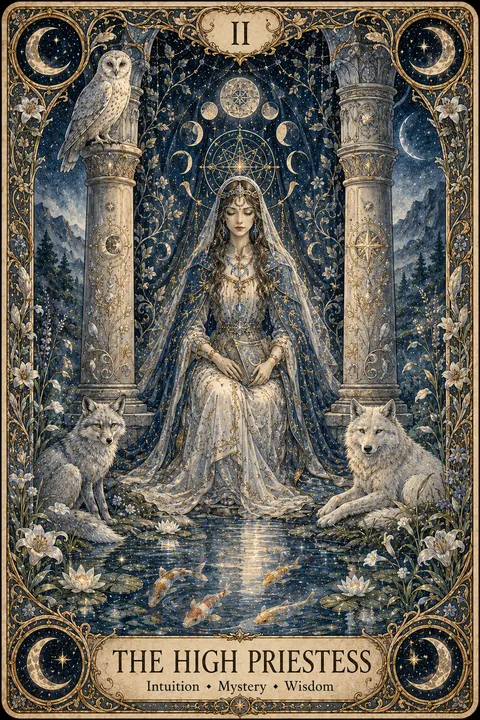
The High Priestess tarot card

The High Priestess

Intuition, secrecy, inner knowing, silence, and the veil between worlds.

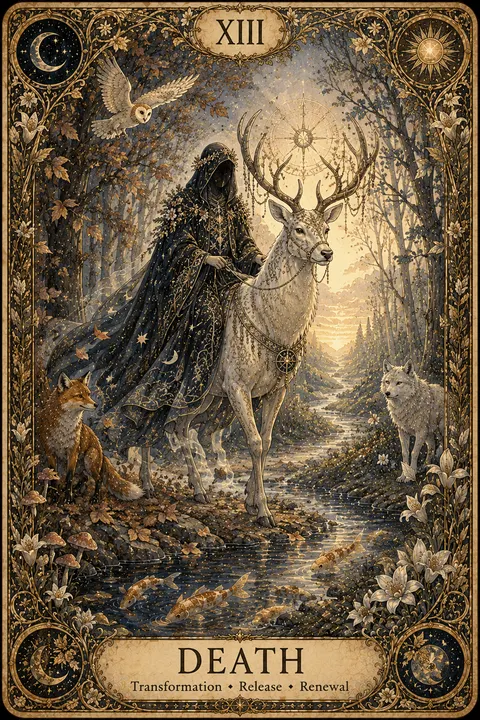
Death tarot card

Death

Endings, release, transformation, and the clearing that makes rebirth possible.

The Tower tarot card

The Tower

Shock, revelation, collapse, truth, and the breaking of false safety.

The Sun tarot card

The Sun

Joy, clarity, vitality, innocence restored, and warmth after uncertainty.

Responsible Reading

The cleanest tarot reading gives you more agency, not less.

A strong tarot reading should not bully you with fate or pretend to outrank faith, conscience, or lived wisdom. It should help you notice what is active, what is hidden, what is repeating, and where your next honest choice might be.

Avoid using tarot to replace medical, legal, financial, or safety advice. The cards are best used for reflection, emotional clarity, pattern recognition, and spiritual meaning-making.

If a card feels frightening, slow down. Ask what the image is protecting, ending, revealing, or asking you to stop carrying. The most dramatic cards often point to liberation after truth arrives.

Common Questions

What is the original meaning of tarot cards?

Historically, tarot began as playing cards used for games in fifteenth-century northern Italy. The divination and occult meanings developed much later, especially from the eighteenth century onward.

How many cards are in a tarot deck?

A common modern tarot deck has 78 cards: 22 Major Arcana cards and 56 Minor Arcana cards divided into four suits.

Are tarot cards meant to predict the future?

Some readers use tarot predictively, but a reflection-focused reading treats the cards as symbolic guidance. The future is read as direction, pattern, or possibility, not a fixed sentence.

Why are some tarot cards scary?

Cards like Death, the Devil, and the Tower use dramatic images because tarot speaks in symbols. They usually point to transformation, attachment, disruption, or truth rather than literal disaster.

Ready to move from meaning to a card?

Bring one question. Draw one card. Let the image answer with a little candlelight and a little truth.