Updated
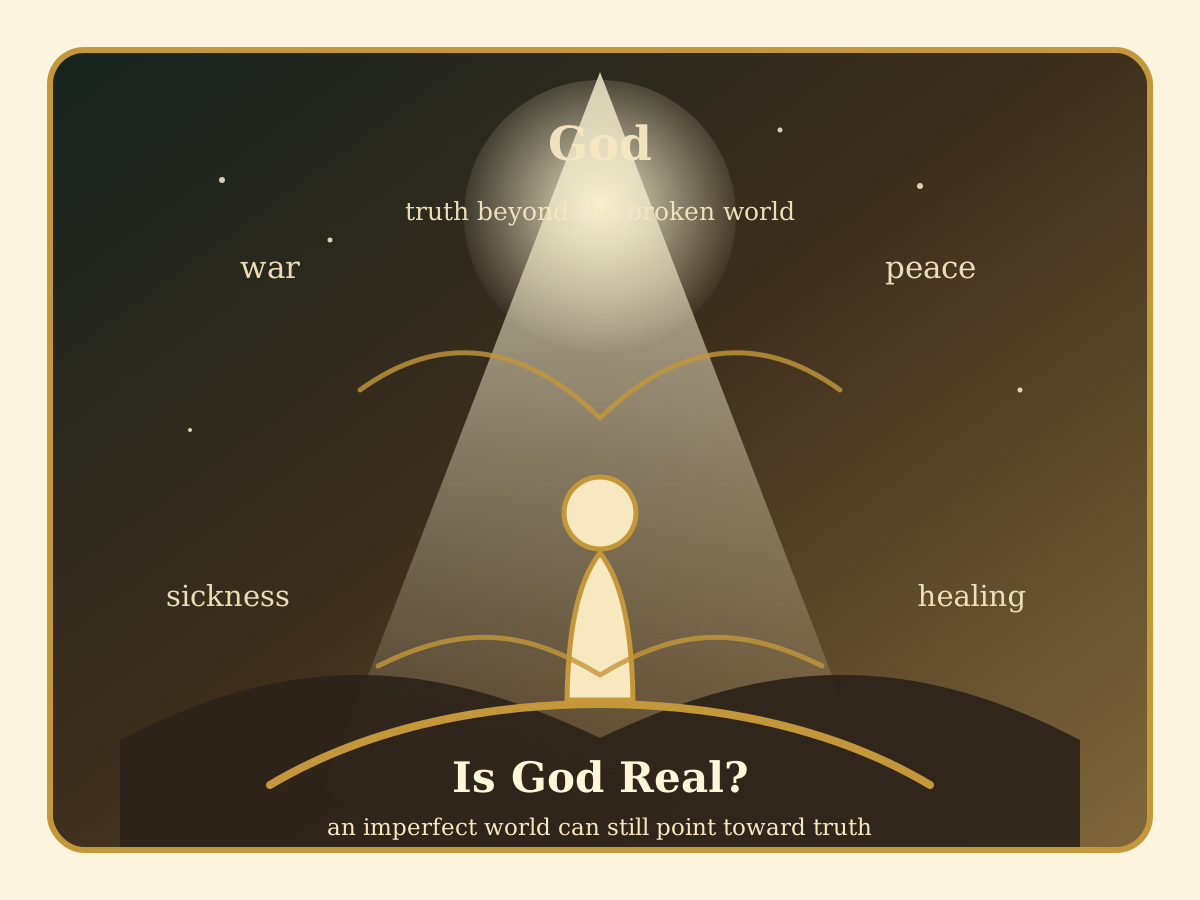
Is God Real? Why an Imperfect World Does Not Disprove God
A spiritual reflection on why war, sickness, crime, and suffering do not automatically disprove God, and how polarity makes human experience possible.
Guide
9 min read
The honest question
Is God real? For many people, this question is not abstract. It appears when they see war, sickness, crime, grief, injustice, or innocent people suffering. The heart asks: if God exists, why is this world so broken?
That question deserves respect. It should not be dismissed with a quick religious sentence. Pain is real. Evil is real. Confusion is real. But the existence of an imperfect world does not automatically prove the absence of God.
We are in an imperfect world to experience
One way to understand this life is that we are in an imperfect world to experience. We are not currently in the final state of perfectness. We are in a temporary field of contrast, limitation, choice, growth, confusion, correction, and awakening.
This does not mean every painful thing is good. It means the world is not built like a finished heaven. It is an unfinished classroom where souls meet polarity and learn what love, courage, patience, mercy, truth, and responsibility actually mean.
Experience requires polarity
For experience to happen, there has to be polarity. Without cold, hot has no meaning. Without sadness, happiness is not recognized as happiness. Without sickness, health is not received as health. Without danger, protection has no shape.
If one end of the polarity is completely removed, the experience itself changes or disappears. A world with no contrast may be perfect, but it would not be human experience as we know it. Contrast is what allows recognition.
War does not reveal God's absence
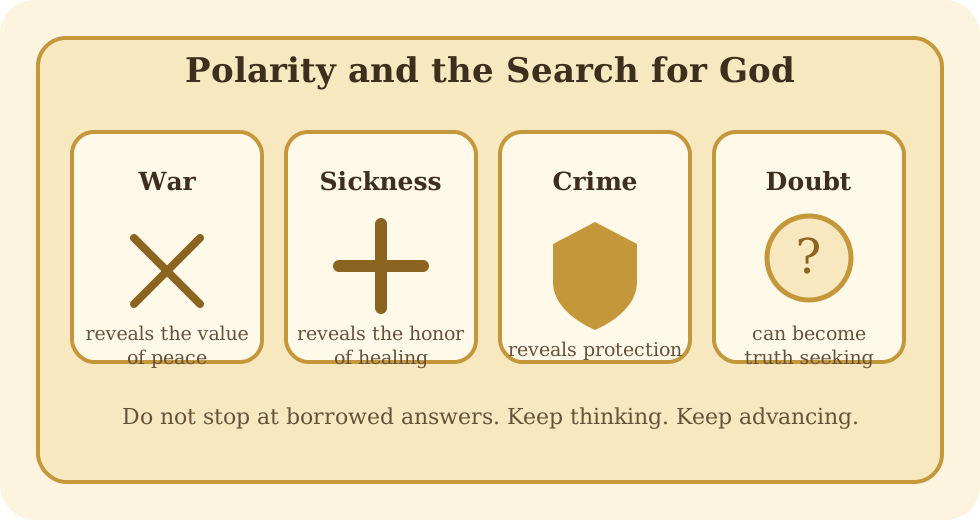
When people see war, they often ask why God does not stop it. But war also reveals something painful about human will, pride, fear, greed, vengeance, and the refusal to live inside divine order. War is not proof that God is violent. It is proof that humanity can move far from love.
The existence of war should not make us passive. It should make us more responsible. Pray for peace, but also practice peace. Reject hatred in your own heart. Refuse to make cruelty sound righteous. Let the horror of war teach you how sacred peace really is.
Sickness reveals the honor of healing
Sickness is one of the hardest parts of embodied life. It humbles the body. It interrupts plans. It exposes dependence. It can feel unfair and frightening. But sickness also reveals the honor of healing.
If sickness did not exist, there would be no doctor in the same sense, no nurse in the same sense, no caregiver in the same sense, no patient courage in the same sense. This does not mean sickness should be welcomed. It means healing becomes visible because fragility exists.
Crime reveals the honor of protection
If there were no crime, there would be no glory in becoming a police officer in the same way. Protection becomes honorable because harm is possible. Justice becomes meaningful because disorder exists. Moral courage becomes visible because danger and wrongdoing are real.
This does not mean crime is necessary as a good thing. Crime should be resisted. Victims should be protected. Wrongdoing should be corrected. But in an imperfect world, the existence of harm creates the field where protection, justice, courage, and mercy can be practiced.
Do not confuse human failure with God's character
A lot of people reject God because they have seen people use God's name badly. They have seen hypocrisy, cruelty, manipulation, pride, or shallow answers presented as faith. That pain is understandable. But human failure is not the same as God's character.
Many of us understand God first through other people's relative experience and understanding. Parents, teachers, religious leaders, friends, culture, trauma, and tradition all shape what we think God is. Some of that is true. Some of it is incomplete. Some of it may be deeply distorted.
Do not trust everything people present
Do not trust everything people present forward just because they sound confident, spiritual, intellectual, or certain. Every person is still limited. Every person is still interpreting. Every person is still on the journey of pursuing the grand truth.
This includes believers, skeptics, teachers, readers, writers, and even your own current understanding. Keep thinking. Keep advancing. Keep testing ideas by their fruit. Does this view produce love, humility, truth, responsibility, courage, justice, and clarity? Or does it produce fear, pride, hatred, avoidance, and control?
Doubt can be part of the journey
Doubt is not always rebellion. Sometimes doubt is the soul refusing to accept a shallow answer. Sometimes doubt is the beginning of a more honest relationship with God. The danger is not questioning. The danger is becoming proud, numb, or closed to truth.
If you are asking whether God is real, do not panic. Ask sincerely. Look at life. Look at conscience. Look at order, beauty, love, mathematics, moral longing, timing, dreams, correction, and the strange ways truth keeps finding you. Let the question open you instead of hardening you.
Tarot as a mirror, not proof
Tarot cannot prove God like a laboratory instrument. It should not replace prayer, conscience, wise counsel, or moral responsibility. But tarot can act as a symbolic mirror when you are wrestling with the contrast of life.
A card can help you name the polarity you are living through: fear and courage, loss and renewal, confusion and truth, breakdown and rebuilding. The card is not God. It is one reflective language that can help the soul listen more carefully under God.
The grand truth is pursued, not possessed
The grand truth is not owned by the loudest person. It is pursued through humility. It is approached through prayer, thought, testing, experience, correction, love, and the willingness to admit when our current understanding is too small.
If God is real, then truth is larger than your fear, larger than your inherited ideas, larger than another person's explanation, and larger than the pain that made you doubt. Keep seeking. Keep thinking. Keep advancing. Do not stop at the first easy answer.
A reflective closing
Is God real? The brokenness of the world does not settle the question against God. It shows that we are living in a temporary imperfect world where polarity makes experience possible and where human beings must choose what they will serve.
Prayer-like affirmation: God of truth and divine order, help me seek You honestly. Do not let suffering make me numb, proud, or careless. Teach me through contrast. Give me courage to resist evil, compassion to heal pain, humility to keep learning, and wisdom to move closer to the grand truth.
Hard Questions About God and an Imperfect World
These questions do not need shallow answers. They need humility, contrast, responsibility, and the courage to keep seeking truth.
| Human question | What polarity reveals | Wise response |
|---|---|---|
| If God is real, why is there war? | Peace becomes visible because conflict exists, but war also reveals how far human will can move from divine order. | Work for peace, refuse hatred, and do not confuse human violence with God's character. |
| If God is real, why is there sickness? | Health is understood through fragility, and healing becomes a sacred calling because the body can suffer. | Seek healing, care for the sick, and honor those who serve without pretending pain is meaningless. |
| If God is real, why is there crime? | Justice and protection become visible because harm can exist in an imperfect world. | Resist harm, protect the vulnerable, and recognize the honor of moral courage. |
| Why do people disagree about God? | Most people understand God through relative experience, family, culture, pain, teachers, and interpretation. | Listen carefully, but test what people present. Keep thinking and keep advancing toward truth. |
| Why is this world imperfect? | Experience requires contrast. Without polarity, many forms of growth, choice, and recognition disappear. | Do not worship suffering, but learn from the temporary field where love and wisdom are practiced. |

Written by
Lucia Aurelia
Tarot educator and symbolic reflection writer
Lucia Aurelia writes about tarot as a reflective language for symbols, questions, journaling, and grounded spiritual practice.
Common Questions
Is God Real? Why an Imperfect World Does Not Disprove God FAQ
Is God real if suffering exists?
Suffering does not automatically disprove God. It shows that we live in an imperfect world where human freedom, limitation, contrast, and disorder are real. The deeper question is whether God can still be found through truth, love, justice, healing, and the pursuit of divine order.
Why would God allow polarity?
Polarity makes experience possible. Without contrast, many things cannot be recognized: peace, healing, justice, courage, gratitude, mercy, and growth. This does not make suffering good in itself, but it helps explain why an imperfect world can still have spiritual purpose.
Should I trust what other people say about God?
Listen, but do not surrender your discernment. Every person speaks from a relative experience and limited understanding. Test what people present through truth, love, humility, conscience, prayer, and lived fruit.
More From The Blog
Continue reading tarot education.

8 min read
Hidden in Plain Sight: Tarot, Secrets, and Spiritual Discernment
Important truths are sometimes hidden by distraction, jokes, confusion, and devaluation. Learn how tarot can train discernment without becoming paranoid.
Read article
8 min read
How God Speaks Through Dreams
A grounded spiritual guide to dreams as one way God can reveal truth, emotion, correction, and invitation without turning every dream into a command.
Read articlePractice with one card
Ask a question, draw a card, and use the reading as the first entry in your tarot journal.