Begin with a clean question
A tarot reading begins before any card is drawn. Ask a question that opens reflection instead of demanding control. Try, What am I not seeing? What pattern is active? What choice deserves my attention?
Tarot reading is not only memorizing card meanings. It is the art of placing a question beside an image and listening until pattern, feeling, and responsibility come into focus.
Reading Method
A tarot reading begins before any card is drawn. Ask a question that opens reflection instead of demanding control. Try, What am I not seeing? What pattern is active? What choice deserves my attention?
A card needs a role. The same card means something different as a past influence, present challenge, hidden fear, advice, or possible outcome. The position gives the image somewhere to speak.
Before memorized keywords, look. Who is moving? Who is still? What is above, below, behind, or blocked? Tarot is a visual language. The first honest detail you notice often matters.
After the image speaks, add structure. Major or Minor Arcana, suit, number, court rank, upright or reversed, and the emotional tone of the question all shape the message.
Numbers
The number on a Minor Arcana card tells you whether something is beginning, growing, breaking, stabilizing, ripening, or completing. This pattern helps even before you know every keyword.
The seed, beginning, raw gift, invitation, or first spark.
A mirror, choice, partnership, tension, polarity, or balance.
Growth, expression, collaboration, creation, and first results.
Structure, rest, foundation, protection, and sometimes stagnation.
Disruption, conflict, loss, instability, and the lesson inside friction.
Repair, harmony, memory, generosity, recovery, and gentle movement.
Testing, strategy, mystery, inner work, temptation, and discernment.
Motion, discipline, repetition, power, change, and momentum.
Ripening, solitude, nearing completion, intensity, and self-knowledge.
Completion, overflow, burden, legacy, ending, and transition to a new cycle.
The Four Suits
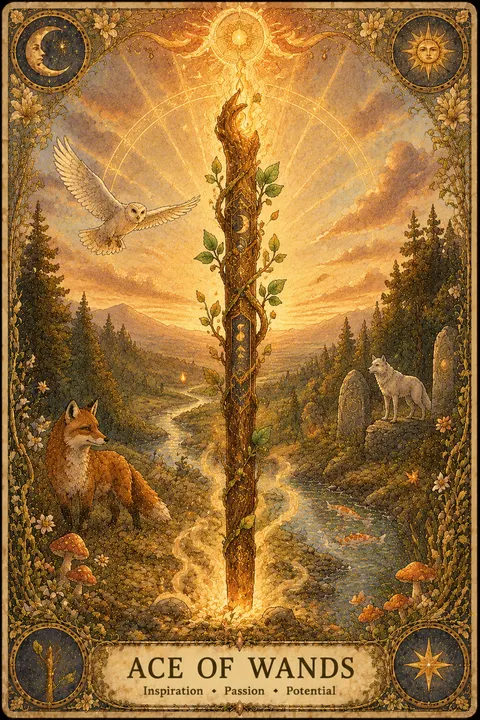
Fire
Will, courage, desire, creativity, ambition, action, spiritual heat.
When Wands appear, ask where energy wants to move. They can show inspiration, impatience, burnout, attraction, risk, and the need to act with purpose.
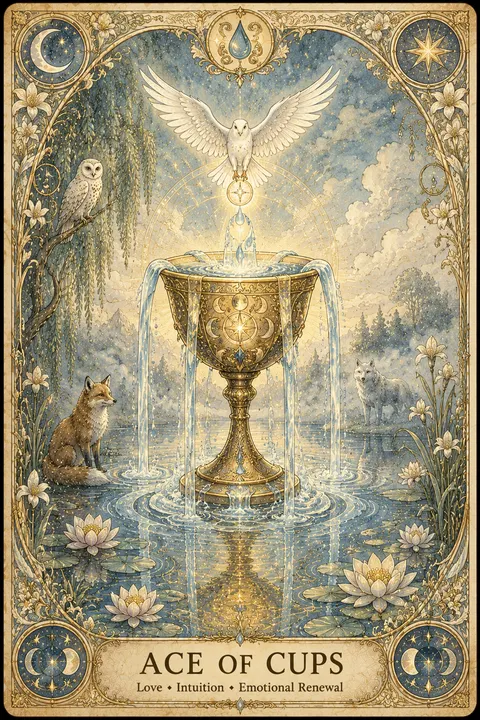
Water
Emotion, love, intuition, memory, longing, healing, relationship.
When Cups appear, listen for feeling. They reveal attachment, compassion, grief, romance, sensitivity, and the deeper truth beneath a reaction.
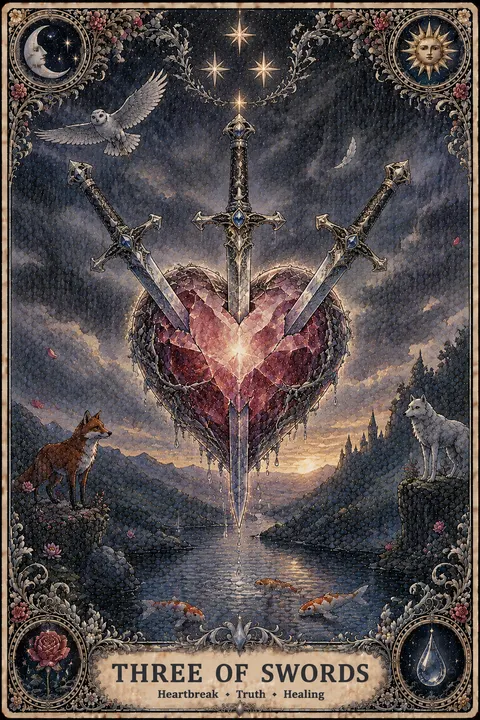
Air
Thought, truth, conflict, language, fear, decision, clarity.
When Swords appear, examine the story your mind is telling. They can cut through confusion, but they can also show anxiety, harsh words, or overthinking.
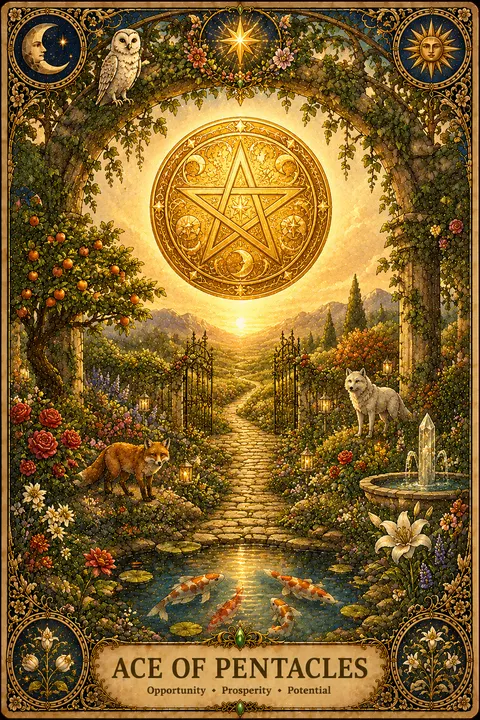
Earth
Money, body, work, time, home, patience, skill, the material world.
When Pentacles appear, bring the reading down to earth. They ask what can be built, tended, budgeted, practiced, protected, or made real.
Arcana and Courts
Major Arcana cards describe thresholds in the soul: awakening, initiation, surrender, crisis, truth, renewal, and completion. When one appears, treat it as a larger lesson rather than a passing mood.
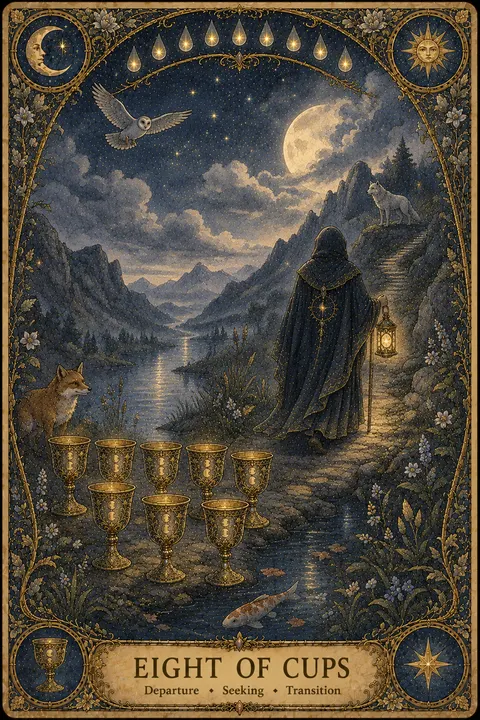
Minor Arcana cards bring the reading into daily life. They speak through choices, conversations, work, emotions, timing, money, habits, and the small decisions that slowly shape a path.
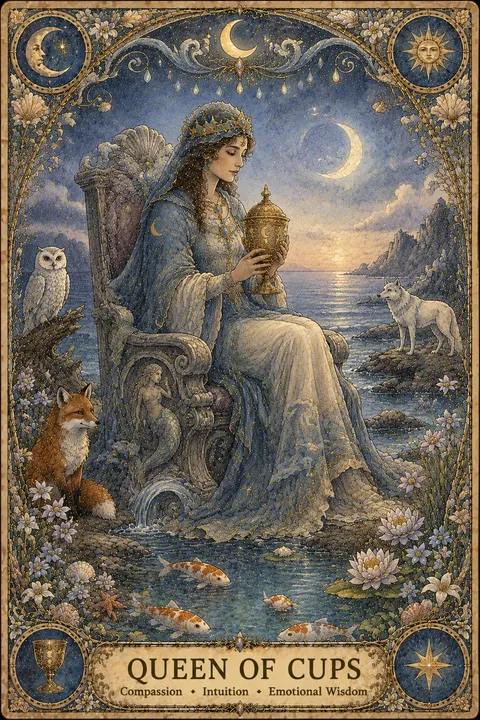
Court cards can describe people, personality modes, maturity levels, or invitations to embody a certain energy. A Queen may ask for steadiness. A Page may ask for curiosity. A King may ask for responsibility.
Upright and Reversed
Upright usually lets the card's energy move plainly. Reversed asks you to look for distortion, delay, inwardness, resistance, or imbalance. It changes the angle, not the whole soul of the card.
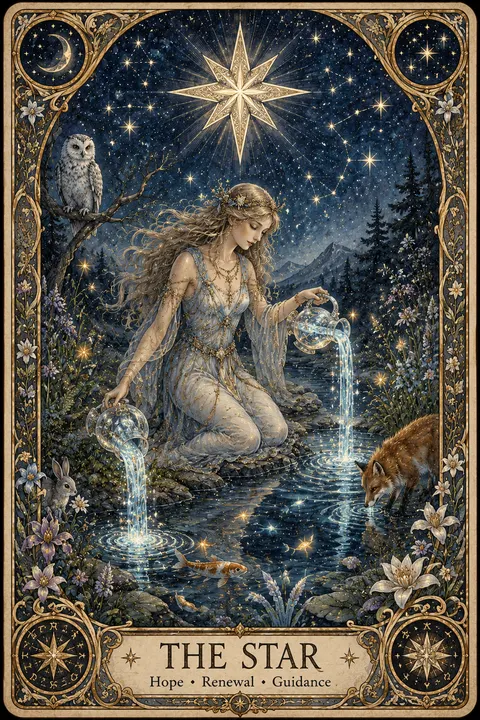
Upright
The energy moves plainly
Reversed
The angle shifts, the soul remains
Five ways a reversal can speak
The upright energy exists, but cannot move freely yet.
The card is happening privately, emotionally, spiritually, or below the surface.
The card has become too loud, too rigid, or too dominant.
The theme is present, but timing, readiness, or conditions are not aligned.
The card reveals avoidance, fear, distortion, or a lesson being resisted.
Spreads
Best for daily reflection, a simple check-in, or one clear question. Read it deeply instead of rushing to draw more cards.
Useful when you need a story arc. The past shows influence, the present shows the active center, and the future shows the direction forming now.
A grounded spread for decisions. It separates what is happening, what complicates it, and what response may restore agency.
Reader's Discipline
Do not use tarot to frighten yourself, stalk certainty, or avoid a necessary conversation. A reading should open attention, not close down responsibility.
When a card feels intense, ask better questions: What is this image asking me to notice? What part of me recognizes it? What choice remains mine? What would wise action look like today?
The mystery of tarot is not that the cards remove free will. The mystery is that an image can sometimes name the inner weather more honestly than ordinary language can.
Common Questions
Start with one card, one clear question, and three layers: what you see in the image, the card's basic meaning, and how it relates to your real situation.
No. Reversed cards can show blocked energy, inward focus, delay, excess, or a softer version of the upright meaning. They are not automatically negative.
Memorization helps, but beginners read better when they combine keywords with visual attention, suit meanings, number patterns, and the question being asked.
Wands usually relate to energy and action, Cups to emotion and relationship, Swords to thought and conflict, and Pentacles to work, money, body, and practical life.
The best way to learn tarot is to read slowly, write down what you notice, and return later to see what the card helped you understand.