Updated
Beginner Tarot Spreads That Actually Help
Use simple beginner tarot spreads for daily clarity, decisions, relationships, and spiritual reflection without overcomplicating the reading.
Guide
8 min read
A spread is a structure for listening
A tarot spread is not powerful because it looks elaborate. It is powerful when the positions help you listen clearly. Each card needs a job. If the positions are vague, the reading becomes vague.
For beginners, simple spreads are often more spiritually useful. They leave less room for panic and more room for prayer, reflection, and honest interpretation.
Start with one to three cards
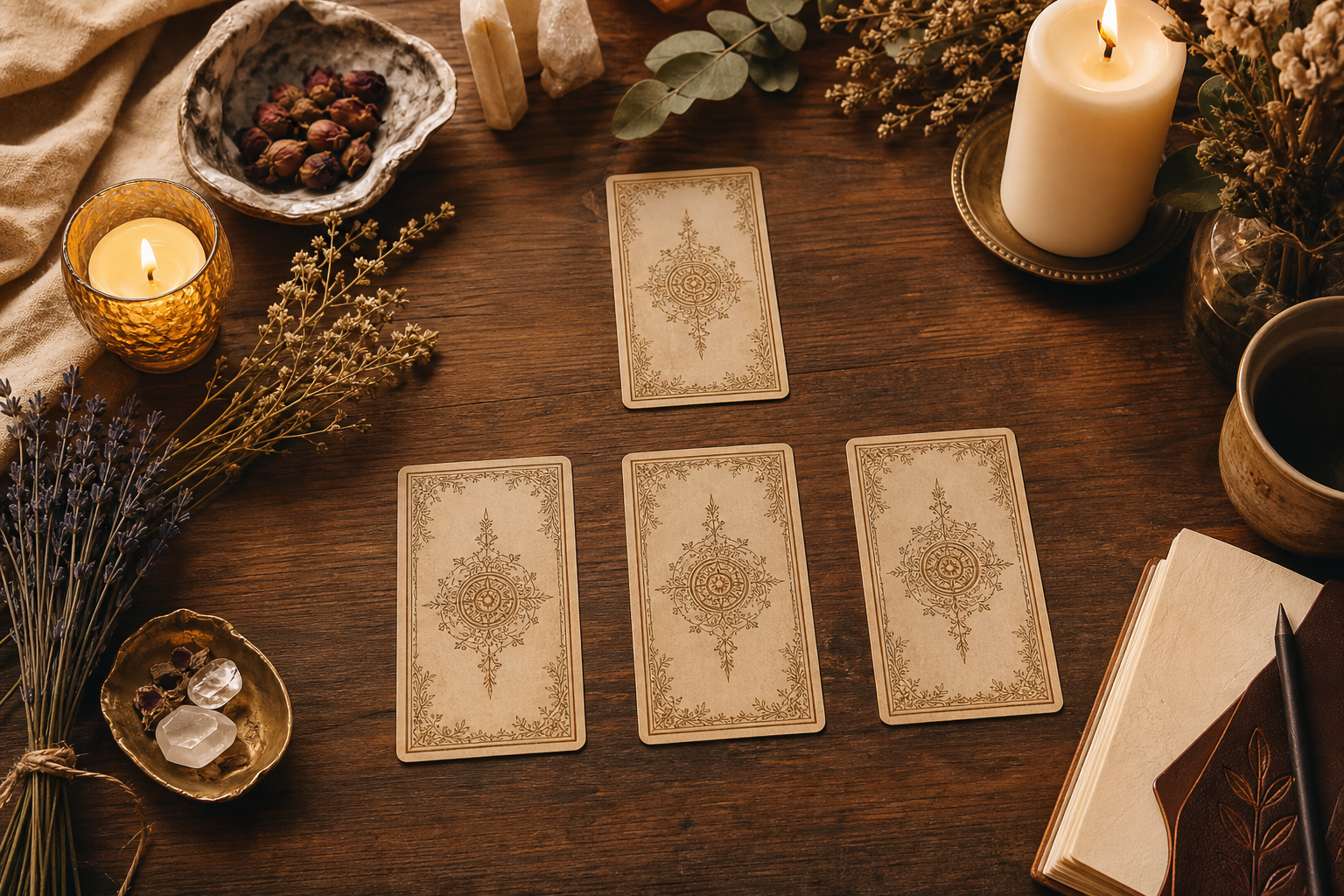
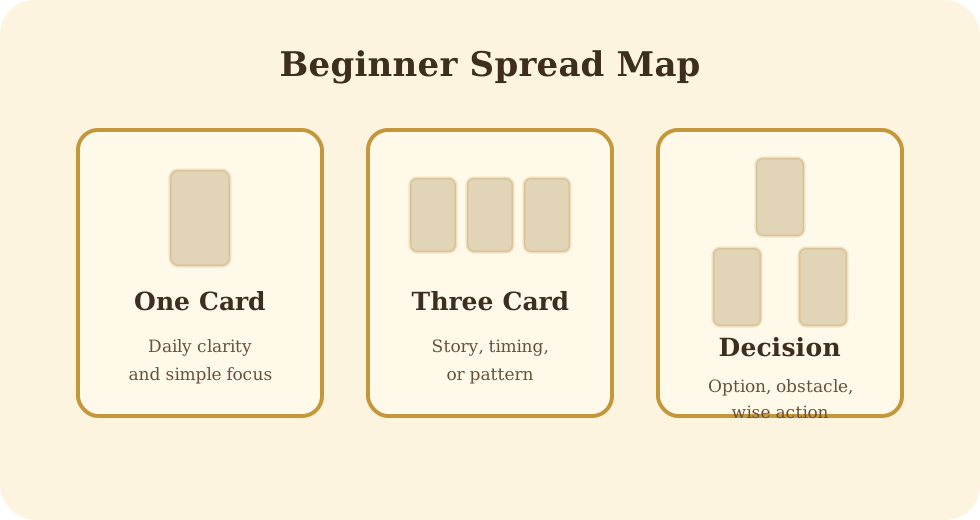
One card is best when you need focus. Three cards are best when you need movement: past, present, future; situation, obstacle, advice; heart, mind, action. These layouts are simple enough to remember and deep enough to use for real questions.
Do not add cards just because you feel uncertain. Sometimes the desire for more cards is really the desire for a guarantee. Tarot is better used as symbolic reflection, not as a machine for certainty.
Match the spread to the question
If your question is about timing or story, use past, present, future. If your question is about confusion, use situation, obstacle, advice. If your question is about love or healing, use heart, mind, action.
The spread should serve the question. A good spread helps you see what is actually being asked instead of pulling you into spiritual entertainment.
Keep God above the spread
Tarot positions can organize reflection, but they are not the highest authority. Pray before reading if that is part of your practice. Ask God for truth, humility, and protection from fear.
A spread should not replace conscience, wisdom, wise counsel, or practical action. It should help you notice what needs to be brought back into divine order.
Close the spread with action
Every beginner spread should end with one sentence: The next faithful step is... This keeps the reading from staying in abstraction.
If the card points to rest, rest. If it points to a conversation, prepare the conversation. If it points to fear, name the fear before God. The spread has done its work when it helps you return to life more honestly.
Simple Tarot Spreads for Beginners
Choose the spread based on the kind of clarity you need, not based on how dramatic the layout looks.
| Spread | Best for | Card positions |
|---|---|---|
| One card | Daily reflection, a simple question, or spiritual check-in. | Message. |
| Past, present, future | Understanding how a situation has been unfolding over time. | Past influence, present center, forming direction. |
| Situation, obstacle, advice | Getting grounded when you feel confused or stuck. | What is happening, what complicates it, wise response. |
| Option A, option B, wisdom | Comparing two choices without surrendering agency. | Path A, path B, higher guidance. |
| Heart, mind, action | Relationship, healing, and personal growth questions. | Feeling, thought pattern, next step. |

Written by
Lucia Aurelia
Tarot educator and symbolic reflection writer
Lucia Aurelia writes about tarot as a reflective language for symbols, questions, journaling, and grounded spiritual practice.
Common Questions
Beginner Tarot Spreads That Actually Help FAQ
What is the easiest tarot spread for beginners?
The easiest tarot spread is one card. It teaches focus, symbolism, and context before adding more positions.
Should beginners use large tarot spreads?
Usually no. Large spreads can be beautiful, but beginners often learn faster with one to three cards and clear positions.
Can I make my own tarot spread?
Yes. A good tarot spread is simply a set of honest positions. Keep each position clear, grounded, and connected to a responsible next step.
More From The Blog
Continue reading tarot education.

7 min read
Court Cards Meaning
Learn Pages, Knights, Queens, and Kings as people, roles, maturity levels, and spiritual invitations in tarot readings.
Read article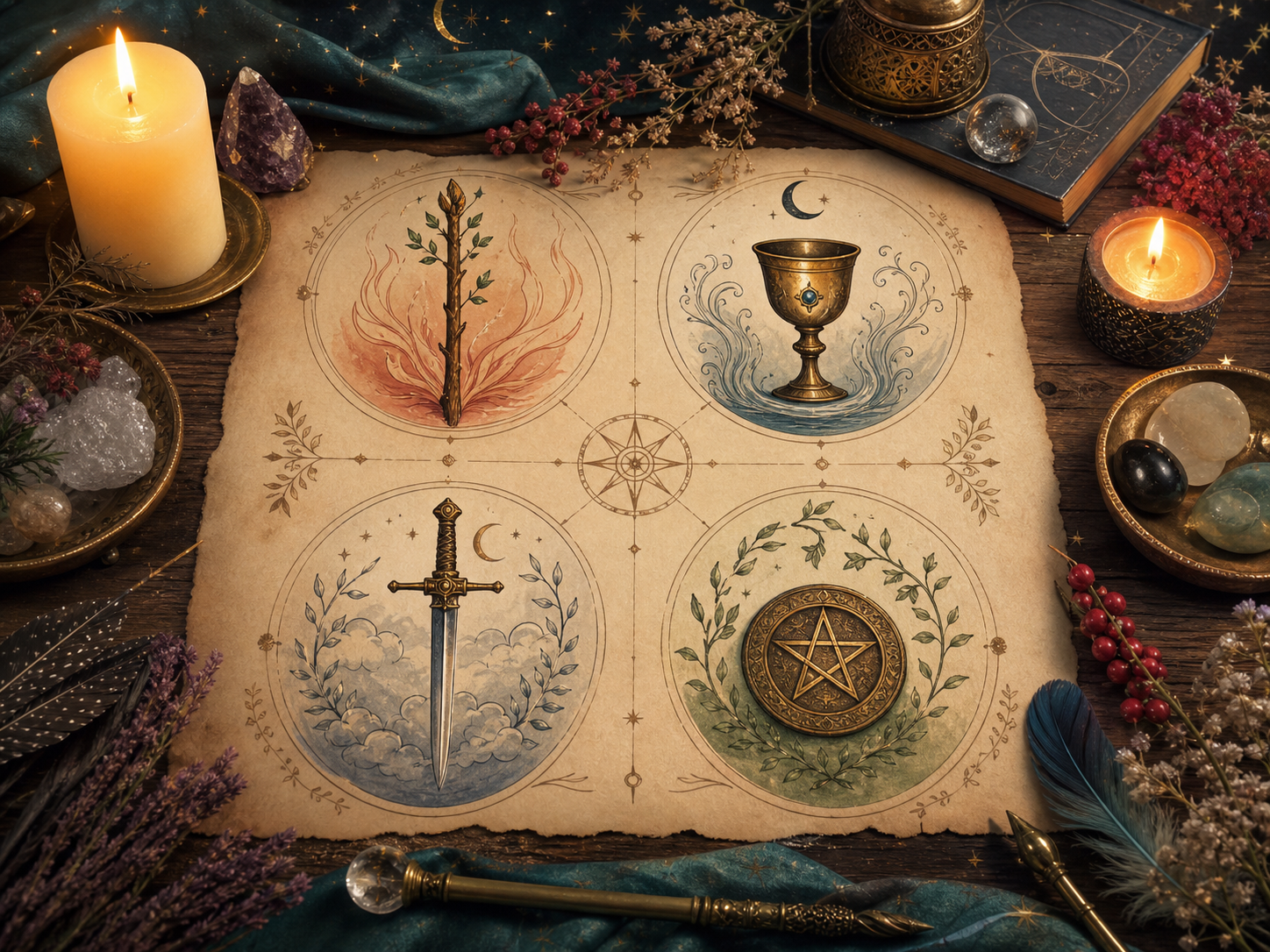
7 min read
Tarot Suits Meaning
Learn the spiritual meaning of Wands, Cups, Swords, and Pentacles through divine order, symbolism, and practical discernment.
Read articlePractice with one card
Ask a question, draw a card, and use the reading as the first entry in your tarot journal.