Updated
What You Can Control and What You Must Surrender
A spiritual guide to knowing the difference between responsibility and control, so you can act wisely without trying to become God.
Guide
8 min read
The confusion that creates suffering
One of the most important things a human being should learn is the difference between what is yours to control and what is yours to surrender. Much suffering comes from reversing these two. We avoid the thing we should act on, then exhaust ourselves trying to control what was never ours.
A person may refuse to tell the truth, but obsess over how another person feels. They may neglect discipline, but beg God to change the result. They may ignore the next faithful step, but spend hours trying to predict the whole future.
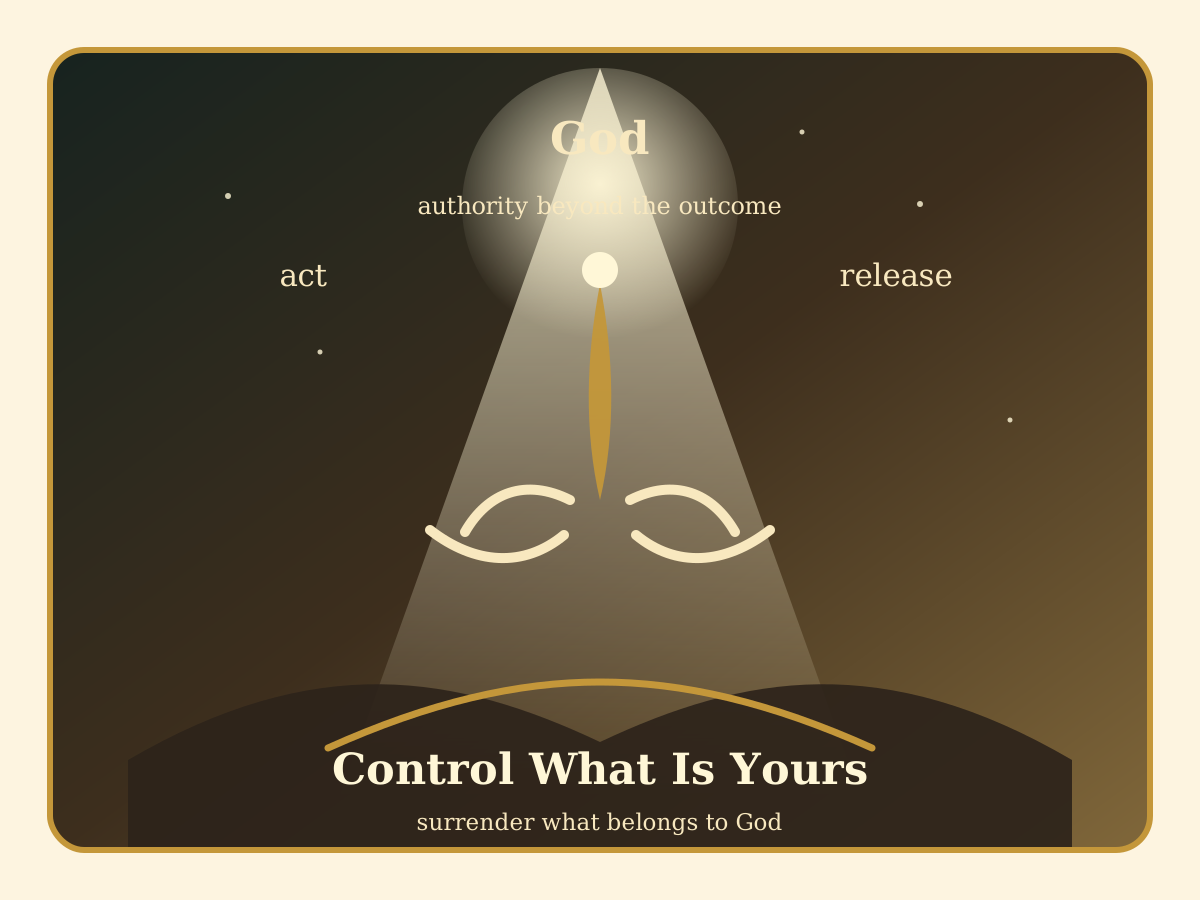
You are responsible, but you are not God
Responsibility is holy. Control becomes dangerous when the soul tries to take God's place. You are responsible for your choices, your words, your repentance, your courage, your boundaries, your effort, and your willingness to walk in truth.
You are not responsible for controlling another person's heart, rewriting the past, preventing every possible loss, guaranteeing every outcome, or seeing every hidden reason behind timing. That belongs to a level of authority you were not built to carry.
What is yours to control
What is yours to control is usually closer than your anxiety wants to admit. Your attention. Your honesty. Your next action. Your schedule. Your apology. Your refusal to lie. Your decision to rest. Your choice to stop feeding the thought that keeps poisoning your peace.
This is why spiritual maturity often looks ordinary. It is not always a dramatic revelation. Sometimes it is answering the message, closing the tab, going to sleep, telling the truth, paying the bill, forgiving slowly, or finally doing the thing you keep asking God to do for you.
What is yours to influence
Some things are not fully yours to control, but they can be influenced. A relationship can be influenced by honesty, patience, humility, and boundaries. An opportunity can be influenced by preparation. A conversation can be influenced by timing and tone.
Influence is different from force. Influence respects reality. It plants, waters, speaks, prepares, and shows up. Then it allows the other side to respond. Manipulation begins when influence refuses to accept that another will exists.
What is yours to surrender
Surrender includes other people's choices, the past, death, divine timing, final outcomes, hidden motives, and the unknown. These are not small things. They are often the very things people most desperately want to control.
Surrender does not mean pretending you do not care. It means admitting the truth: I care deeply, but I am not God. I can pray, act, grieve, prepare, and love, but I cannot rule the whole field.
False control often disguises fear
False control can look productive from the outside. Overthinking. Rechecking. Asking the same question repeatedly. Reading every sign as if your life depends on it. Trying to manage someone's reaction before they even speak.
But underneath false control is usually fear. Fear of loss. Fear of rejection. Fear of being wrong. Fear of being unseen. Fear that if you stop holding everything together, God will not hold you. That fear needs compassion, but it should not be allowed to lead.
Do not use prayer to avoid responsibility
Prayer is sacred, but prayer can be misused when it becomes a way to avoid responsibility. Do not pray for God to fix a relationship while refusing to tell the truth. Do not pray for direction while rejecting the wisdom already given. Do not pray for peace while continuing the habit that destroys peace.
A mature prayer does not say, God, do everything so I never have to change. A mature prayer says, God, show me what is mine to do, give me courage to do it, and help me surrender what belongs to You.
Do not use action to avoid surrender
The opposite error is using action to avoid surrender. Some people keep doing, fixing, chasing, explaining, proving, and rescuing because stillness would force them to admit they cannot control the outcome.
There is a time to act and a time to stop. A time to speak and a time to let silence reveal the truth. A time to prepare and a time to wait. Wisdom is not only knowing what to do. Wisdom is also knowing when your doing has become fear wearing the mask of responsibility.
Tarot can mirror the boundary
Tarot can help when it stays in the right place. It is not God, and it should not become a control machine. But as a symbolic mirror, a reading can help you see whether you are avoiding action or gripping an outcome too tightly.
The Emperor may ask where structure is needed. The Hanged Man may ask what must be surrendered. Strength may ask for disciplined gentleness. The Moon may reveal fear disguising itself as intuition. The card is useful when it returns you to prayer, discernment, and responsible action.
Peace is not having every answer
Peace does not come from having every answer. Peace comes when your soul returns to its proper size. You are not nothing, and you are not God. You are a creature with agency, responsibility, limits, and a real relationship with divine wisdom.
Do what is yours. Release what is not. Repeat this until your nervous system learns that surrender is not abandonment. It is trust. It is order. It is letting God be God while you remain faithful with your portion.
A reflective closing
Ask yourself today: What am I avoiding that is mine to do? What am I gripping that belongs to God? What would one faithful step look like if I stopped trying to control the whole future?
Prayer-like affirmation: God of wisdom and divine order, show me what is mine to control, what is mine to influence, and what is mine to surrender. Give me courage for responsibility and peace for release. Let me stop trying to become You, and teach me to be faithful with what You placed in my hands.
Control, Influence, and Surrender
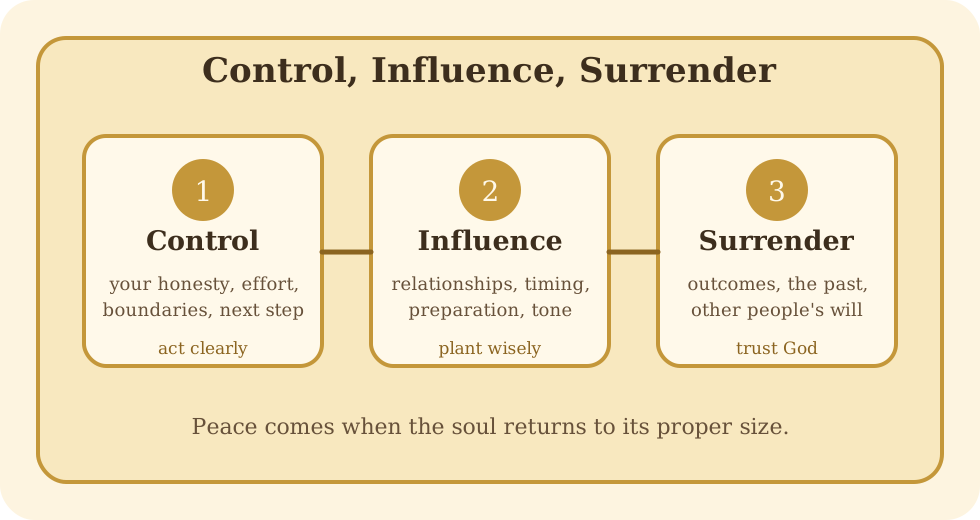
Peace often begins when you stop confusing your responsibility with God's authority.
| Category | What belongs here | Spiritual practice |
|---|---|---|
| Control | Your honesty, attention, choices, discipline, repentance, words, effort, boundaries, and next step. | Act clearly. Do the work God placed in your hands. |
| Influence | Relationships, communication, preparation, timing, opportunities, habits, and how others may receive you. | Prepare well, speak truthfully, and release the need to force a response. |
| Surrender | Other people's will, the past, death, divine timing, final outcomes, hidden motives, and the unknown. | Pray, grieve honestly, trust God, and stop trying to rule what is not yours. |
| False control | Overthinking, repeated checking, spiritual obsession, people-pleasing, manipulation, and anxious prediction. | Name fear directly and return to one faithful action. |
| True peace | Responsibility without domination, surrender without passivity, and trust without denial. | Let God be God while you remain faithful with your portion. |

Written by
Lucia Aurelia
Tarot educator and symbolic reflection writer
Lucia Aurelia writes about tarot as a reflective language for symbols, questions, journaling, and grounded spiritual practice.
Common Questions
What You Can Control and What You Must Surrender FAQ
How do I know what is mine to control?
What is yours to control usually involves your own honesty, choices, effort, boundaries, attention, repentance, and next action. If it requires controlling another person's will or the final outcome, it is not fully yours.
Does surrender mean doing nothing?
No. Spiritual surrender is not passivity. It means doing your faithful part while releasing what belongs to God, time, truth, and other people's free will.
Can tarot help with control and surrender?
Tarot can help as a symbolic mirror by showing where fear, attachment, avoidance, or responsibility may be present. It should not replace prayer, conscience, wise counsel, or practical action.
More From The Blog
Continue reading tarot education.

8 min read
Hidden in Plain Sight: Tarot, Secrets, and Spiritual Discernment
Important truths are sometimes hidden by distraction, jokes, confusion, and devaluation. Learn how tarot can train discernment without becoming paranoid.
Read article
9 min read
Is God Real? Why an Imperfect World Does Not Disprove God
A spiritual reflection on why war, sickness, crime, and suffering do not automatically disprove God, and how polarity makes human experience possible.
Read articlePractice with one card
Ask a question, draw a card, and use the reading as the first entry in your tarot journal.