Updated
Tarot Journaling for Beginners
Learn a simple tarot journaling practice for turning one card, one question, and a few honest notes into clearer reflection.

Guide
6 min read
Start with one card
The simplest tarot journal practice begins with one question and one card. More cards can be useful, but beginners often learn faster when they stay with a single image long enough to notice what it is actually stirring.
Write the question at the top of the page. Then write the card name, whether it is upright or reversed, and the first three details you notice in the image before looking up any meaning.
Separate meaning from reaction
A tarot card has traditional meanings, but it also creates a personal reaction. Keep both. If The Hermit appears, the traditional meaning may involve solitude, wisdom, and inner guidance. Your reaction may be relief, resistance, loneliness, or recognition.
The journal becomes useful when you can see the difference between what the card usually means and what it awakens in you today.
Use a three-part note
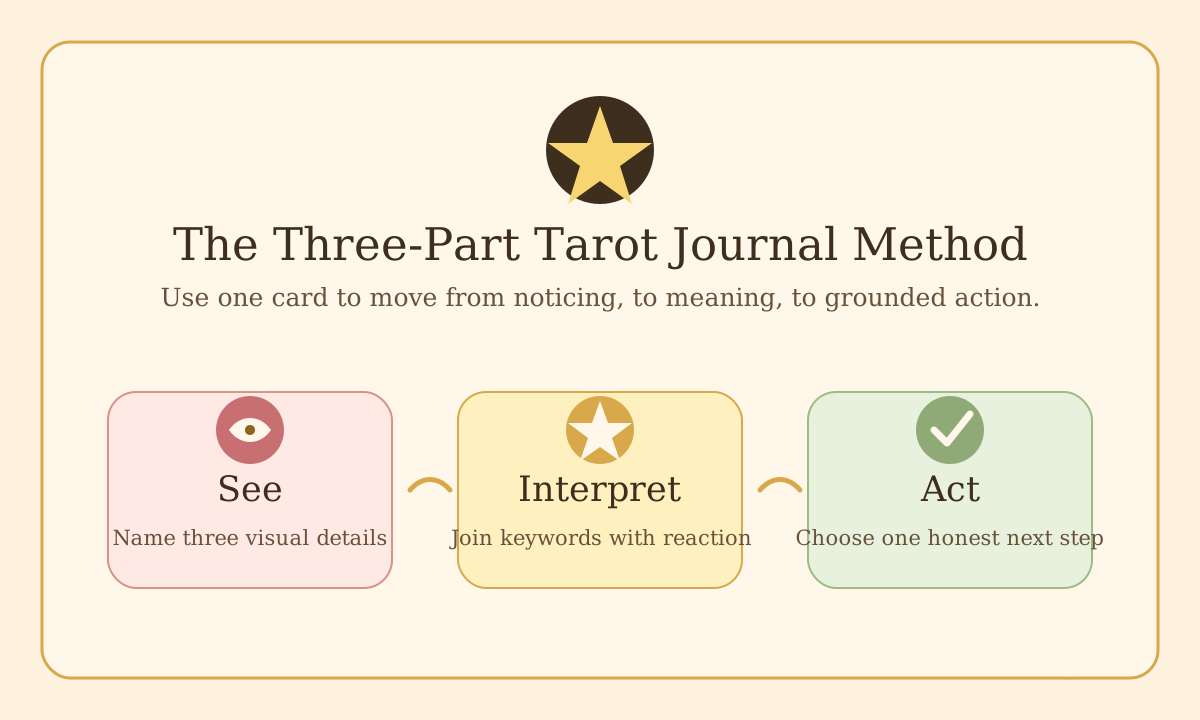
A reliable beginner format is: what I see, what it may mean, and what I will do next. This keeps the reading grounded. Tarot reflection should not end in fog. It should lead to a clearer question, a softer truth, or one practical next step.
For example, if you draw the Eight of Pentacles, you might notice repeated work, careful hands, and steady progress. The meaning may point to practice. The next step may be to return to one small discipline instead of waiting for a dramatic sign.
Track patterns over time
After a few weeks, review your entries. Repeating suits, numbers, and cards can reveal the themes that keep returning. Many Cups may show emotional processing. Many Swords may show overthinking or the need for a clearer conversation. Many Pentacles may bring attention to work, money, body, or daily habits.
The goal is not to prove that every card predicted an event. The goal is to notice which symbols helped you name the season you were moving through.
Close with responsibility
End every tarot journal entry with one grounded sentence: The choice that remains mine is... This keeps the reading from becoming passive. The card can illuminate a pattern, but your response still belongs to you.
A good tarot journal does not remove agency. It teaches you to listen more carefully to the image, the question, and the quiet truth underneath both.
Simple Tarot Journal Entry Structure
Use this table as a beginner tarot journaling template after drawing one card.
| Journal field | What to write | Why it helps |
|---|---|---|
| Question | The exact question you asked before drawing the card. | Keeps the reading focused and prevents the meaning from drifting. |
| Card and orientation | The card name plus upright or reversed. | Preserves the context you will want when reviewing later. |
| First image details | Three visual details you noticed before checking keywords. | Builds your own symbolic eye instead of relying only on memorization. |
| Meaning and reaction | The traditional meaning beside your honest emotional response. | Shows the difference between card meaning and personal resonance. |
| Next step | One grounded action, question, or reflection to carry forward. | Turns the reading back toward agency and responsibility. |

Written by
Lucia Aurelia
Tarot educator and symbolic reflection writer
Lucia Aurelia writes about tarot as a reflective language for symbols, questions, journaling, and grounded spiritual practice.
Common Questions
Tarot Journaling for Beginners FAQ
What should I write in a tarot journal?
Write the question, card name, orientation, first image details, traditional meaning, your reaction, and one grounded next step.
Do beginners need to memorize tarot meanings before journaling?
No. Memorized meanings help, but journaling works best when beginners combine keywords with what they notice in the card image.
How often should I journal with tarot cards?
Start with one card a few times a week. Review your notes over time so repeating cards, suits, and themes can become visible.
More From The Blog
Continue reading tarot education.

7 min read
Court Cards Meaning
Learn Pages, Knights, Queens, and Kings as people, roles, maturity levels, and spiritual invitations in tarot readings.
Read article
7 min read
Tarot Suits Meaning
Learn the spiritual meaning of Wands, Cups, Swords, and Pentacles through divine order, symbolism, and practical discernment.
Read articlePractice with one card
Ask a question, draw a card, and use the reading as the first entry in your tarot journal.