Updated
How God Speaks Through Dreams
A grounded spiritual guide to dreams as one way God can reveal truth, emotion, correction, and invitation without turning every dream into a command.

Guide
8 min read
God is not limited to waking language
God can speak through scripture, prayer, conscience, people, timing, silence, suffering, numbers, nature, tarot symbolism, and dreams. The Divine is not trapped inside one format. If a dream awakens truth, humility, repentance, courage, or love, it may be worth listening to carefully.
But the channel is never higher than the Source. A dream is not God. A dream is not final authority. A dream is a possible mirror, invitation, warning, or mercy. The soul becomes safer when it can receive a dream without worshiping the dream.
The dream may reveal what you do not admit
Many dreams are not predictions. They are revelations of present truth. You dream of losing your voice because you have stopped speaking honestly. You dream of a locked door because part of your life feels closed. You dream of water because emotion is rising. You dream of an old person because an unfinished memory still asks to be healed.
The spiritual mistake is to jump immediately into prediction: What will happen? The wiser question is often: What is already happening in me that God is allowing me to see?
Notice the image before the explanation
When you wake from a strong dream, write the plain details first. Do not begin with interpretation. Write the room, the road, the person, the color, the object, the weather, the animal, the door, the water, the number, the sentence, or the moment that carried the most charge.
Images work because they hold more than one layer. A house may be your body, your family system, your private self, or the life you are building. A child may be innocence, vulnerability, a new beginning, or a neglected part of you. Let the image stay alive before you flatten it into a single meaning.
The emotion is part of the message
A dream about the same symbol can mean different things depending on the emotion. Water with peace may suggest cleansing, surrender, or spiritual movement. Water with terror may reveal overwhelm, grief, or fear of being swallowed by feeling.
Ask what the dream made you feel. Fear does not always mean danger. Peace does not always mean approval. The feeling is a clue, not the whole truth. Bring it into prayer instead of obeying it blindly.
Test the dream by its fruit
A true spiritual message should lead toward truth, humility, love, courage, patience, repentance, healing, or responsible action. If your interpretation makes you proud, panicked, obsessive, cruel, passive, or convinced you no longer need wisdom, slow down.
God's correction can be uncomfortable, but it does not need to make you spiritually reckless. Divine wisdom can pierce, but it also brings order. A dream that leaves you frantic may need gentler discernment before you act on it.
Do not use dreams to avoid waking responsibility
Some people chase dream meanings because waking responsibility feels harder. They ask what the dream means while avoiding the apology, the boundary, the honest conversation, the doctor's appointment, the work, the rest, or the practical step already in front of them.
A meaningful dream should not remove agency. It should return you to your portion. If the dream shows a broken bridge, perhaps the next step is not to predict disaster. Perhaps it is to repair communication, admit distance, or stop pretending the connection is fine.
Tarot can help reflect on a dream
Tarot can be useful after a dream when it remains a symbolic mirror. You might draw one card and ask, What truth is this dream asking me to face? Or, What emotion needs care after this dream? The card does not replace God. It gives language to what the image may be stirring.
This is especially helpful when the dream feels large but unclear. The Moon may name confusion or hidden fear. Temperance may call for integration. Judgment may show awakening. The Star may remind you that healing is still possible. The card helps you listen, but discernment remains higher than the card.
A dream can be sacred without being absolute
One of the most mature ways to hold a dream is with reverence and humility at the same time. Reverence says, this may matter. Humility says, I may not understand it perfectly yet.
You do not need to dismiss every dream to be rational, and you do not need to obey every dream to be spiritual. The middle path is prayerful discernment: receive, write, test, wait, ask for wisdom, and act only where truth becomes clear.
A reflective closing
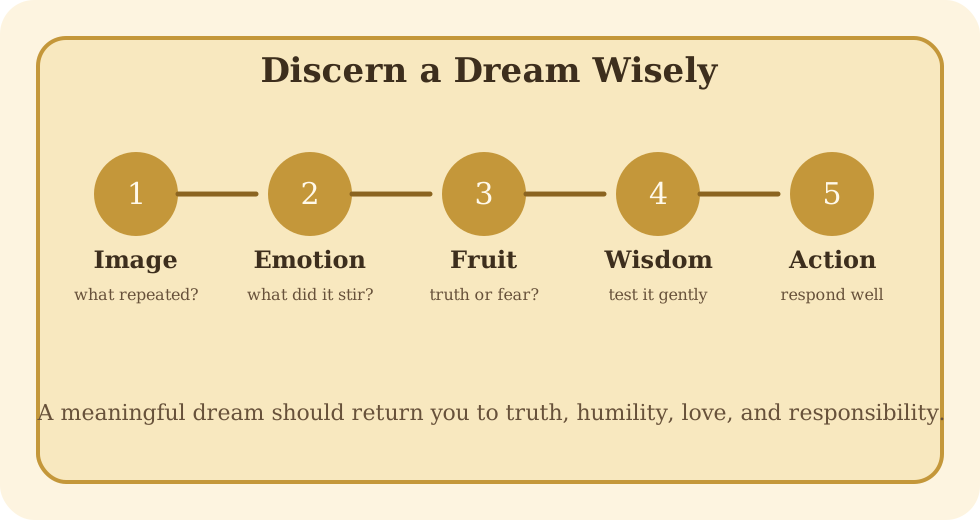
If a dream stays with you, ask: What image repeated? What emotion did it awaken? What waking pattern does it touch? What fruit does my interpretation produce? What faithful step is actually mine?
Prayer-like affirmation: God of truth and divine wisdom, teach me to receive dreams without fear and interpret them without pride. Let every image return me to love, humility, responsibility, and the quiet courage to obey what is truly from You.
How to Discern a Dream
A meaningful dream should be received with humility, tested with wisdom, and brought back into grounded life.
| Dream layer | What to ask | Wise response |
|---|---|---|
| Image | What object, place, person, color, or scene stayed with me after waking? | Write it down before explaining it. Let the image speak before rushing to a conclusion. |
| Emotion | What feeling was strongest: peace, fear, grief, warning, longing, shame, or relief? | Treat the emotion as part of the message, not as proof that your first interpretation is correct. |
| Pattern | Does this dream connect to something repeating in my waking life? | Look for alignment with real behavior, conversations, timing, and choices. |
| Fruit | Does my interpretation lead toward truth, love, humility, courage, and responsibility? | Reject interpretations that feed obsession, pride, panic, revenge, or avoidance. |
| Action | What small faithful step remains mine after prayer and reflection? | Respond with prayer, journaling, wise counsel, apology, boundary, rest, or practical action. |

Written by
Lucia Aurelia
Tarot educator and symbolic reflection writer
Lucia Aurelia writes about tarot as a reflective language for symbols, questions, journaling, and grounded spiritual practice.
Common Questions
How God Speaks Through Dreams FAQ
Can God really speak through dreams?
Yes, God can use dreams as one channel of communication. But a dream should be tested with prayer, conscience, wisdom, and the fruit it produces rather than treated as automatic command.
Does every dream have a spiritual meaning?
No. Some dreams are mental processing, stress, memory, or imagination. A meaningful dream usually carries weight, repetition, correction, peace, warning, or a pattern that connects to waking life.
How should I respond to a powerful dream?
Write it down, pray over it, notice the strongest emotion, test the interpretation, and choose one grounded response. Do not let the dream replace God, conscience, or practical wisdom.
More From The Blog
Continue reading tarot education.

8 min read
Hidden in Plain Sight: Tarot, Secrets, and Spiritual Discernment
Important truths are sometimes hidden by distraction, jokes, confusion, and devaluation. Learn how tarot can train discernment without becoming paranoid.
Read article
9 min read
Is God Real? Why an Imperfect World Does Not Disprove God
A spiritual reflection on why war, sickness, crime, and suffering do not automatically disprove God, and how polarity makes human experience possible.
Read articlePractice with one card
Ask a question, draw a card, and use the reading as the first entry in your tarot journal.