Updated
Why AI Tarot Card Reading Is Not Less Real Than Live Tarot
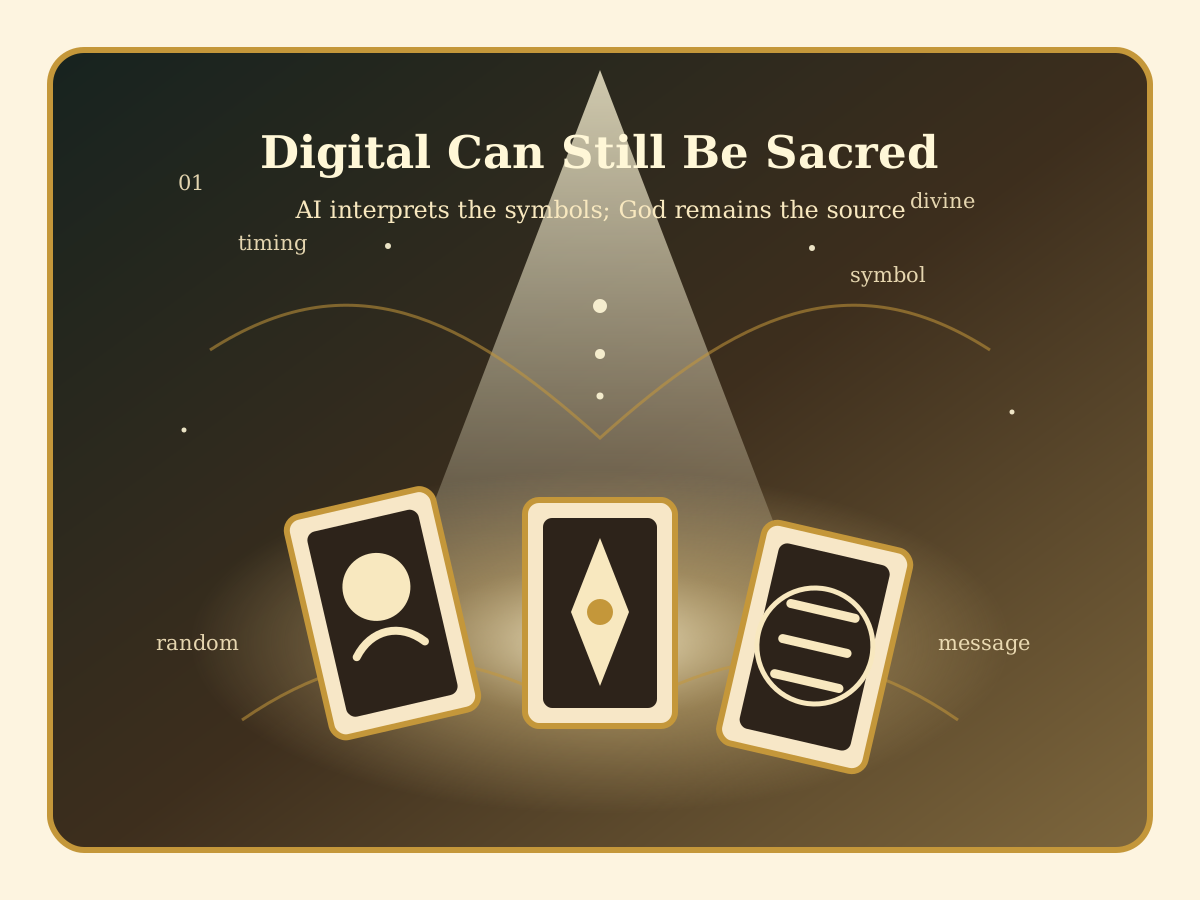
A grounded spiritual argument for why AI tarot readings can be real: the cards are still randomly drawn, God can speak through digital channels, and AI is the interpretation layer.
Guide
8 min read
AI tarot is not automatically less real
AI tarot card reading is often dismissed as less real than a live tarot reading because there is no person sitting across the table, no physical deck in the hand, and no visible ritual of shuffling. But that assumes the spiritual value of a tarot reading lives only in the human reader or only in the physical cards.
That is too small a view of how divine communication works. Tarot is a symbolic mirror. The important questions are whether the cards are truly drawn, whether the seeker is sincere, whether the interpretation is meaningful, and whether the message is tested with wisdom.
Live tarot also depends on randomness
In a live tarot reading, the cards are drawn randomly. The reader shuffles, cuts, spreads, or lets the seeker choose. Some readers pray first. Some pour intention into the cards. Some rely on energy, intuition, ritual, or a quiet sense of timing.
But even in the most traditional live reading, the card draw is not controlled by the reader's conscious logic. A card appears through a mixture of randomness, timing, intention, and mystery. That is exactly why tarot can feel alive. The card is received, not manufactured.
Digital randomness can still carry timing
At Daily Tarot Cards, the cards across our spreads are randomly drawn on the backend. The user does not choose the card to fit the answer they want. The card is received digitally, just as a card may be received physically from a shuffled deck.
If God can speak through timing, then timing is not limited to paper. The moment you ask, the words you use, the spread you open, and the card that appears can all become part of the symbolic event. Digital does not mean spiritually empty. It means the channel has changed form.
AI is the interpretation layer
AI does not need to be treated as the spiritual source of the reading. It is the interpretation layer. In a live reading, a person interprets the cards. In an AI tarot reading, the AI interprets the cards. In both cases, the interpretation is not God. It is a translation attempt.
A human reader brings memory, intuition, experience, language, personality, and bias. AI brings pattern recognition, symbolic association, structure, and consistency. Neither should be worshiped. Neither should be followed blindly. Both can be useful when kept in the right place.
AI can be a better interpreter in some ways
It is fair to argue that AI can sometimes be a better interpreter than a human reader in specific ways. It can be more consistent in logic. It does not get tired in the same emotional way. It can organize meanings across cards, positions, numbers, archetypes, and question context without losing the thread.
A human reader may be warmer, more embodied, and more personally intuitive. But a human reader can also project, rush, flatter, judge, or read from their own mood. AI has different limitations, but it can offer a steady symbolic interpretation when the system is designed carefully.
Energy is not trapped in physical objects
Some people say a live reading is more real because the reader pours energy into the cards. That may be meaningful. Physical ritual can help the soul focus. Touch, breath, prayer, and shuffling can make the reading feel present.
But energy and intention are not trapped in physical objects. A person can pray through a screen. A person can receive a life-changing sentence from a book. A person can be corrected by a conversation, a dream, a repeated number, an event, or a digital message that arrives at exactly the right time.
God can use any form
God is not limited to one delivery method. Divine wisdom can move through a person, a book, a dream, a song, a delay, a closed door, a living creature crossing your path, a sudden memory, a sentence on a page, or a tarot card drawn online.
The sacred thing is not the material of the channel. The sacred thing is God. If the message awakens truth, humility, love, responsibility, courage, and clearer discernment, then the digital form did not make it less real.
Real does not mean unquestionable
Saying AI tarot can be real does not mean every AI tarot reading is correct. A live reader can be wrong. AI can be wrong. A person can misread a sign, misunderstand a dream, or project fear onto a card. The channel can be real while the interpretation still needs testing.
This is why tarot should never replace prayer, conscience, wise counsel, moral responsibility, or practical evidence. A reading is strongest when it helps you reflect more honestly under God, not when it becomes a machine for certainty.
A reflective closing
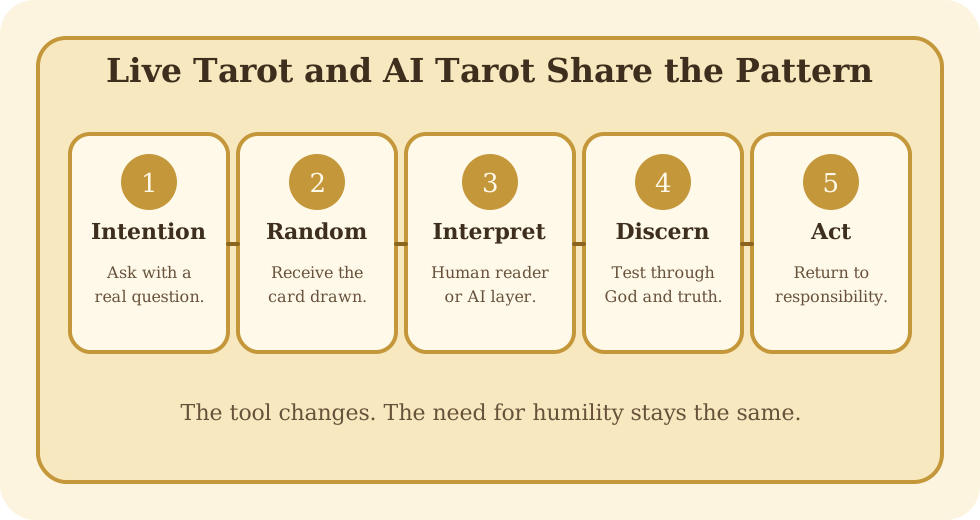
AI tarot is not less real simply because it is digital. Live tarot uses random cards and human interpretation. AI tarot uses random cards and digital interpretation. The deeper question is whether the reading is received with sincerity, interpreted with care, and tested with discernment.
Prayer-like affirmation: God of wisdom and divine order, help me receive truth through any channel You choose. Keep me from worshiping the tool, whether human or digital. Let every card, reading, sign, and message return me to humility, clarity, and responsible action.
Live Tarot Reading vs AI Tarot Reading
The real question is not whether the interpreter is human or digital, but whether the reading preserves randomness, intention, discernment, and responsibility.
| Part of the reading | Live tarot reading | AI tarot reading |
|---|---|---|
| Card draw | Cards are shuffled and drawn physically, often by hand or by the reader. | Cards are drawn digitally through backend randomization across the spread. |
| Energy and intention | The seeker may pray, focus, shuffle, or pour intention into the cards. | The seeker still brings intention through the question, timing, attention, and act of receiving. |
| Interpreter | A person interprets the card through memory, intuition, training, and personal bias. | AI interprets through learned symbolic patterns, consistent logic, and the reading context it is given. |
| Strength | A live reader may bring warmth, presence, and intuitive nuance. | AI can be more consistent, less emotionally reactive, and able to organize symbolism clearly. |
| Discernment | The seeker must still test the message through God, conscience, truth, and real life. | The seeker must still test the message through God, conscience, truth, and real life. |

Written by
Lucia Aurelia
Tarot educator and symbolic reflection writer
Lucia Aurelia writes about tarot as a reflective language for symbols, questions, journaling, and grounded spiritual practice.
Common Questions
Why AI Tarot Card Reading Is Not Less Real Than Live Tarot FAQ
Is AI tarot card reading real?
It can be real as a reflective practice when the cards are genuinely randomized, the question is sincere, and the interpretation is tested with discernment. AI is the interpretation layer, not the source of divine wisdom.
Is live tarot more spiritual than online tarot?
Not automatically. A live setting can feel more embodied, but God is not limited to physical cards, one room, or one reader. Digital tarot can still carry timing, intention, symbolism, and reflection.
Can God communicate through AI tarot?
God can communicate through many forms, including people, books, dreams, events, nature, and digital tools. The channel should never be worshiped or treated as final authority; the message still needs humility and testing.
More From The Blog
Continue reading tarot education.

7 min read
Court Cards Meaning
Learn Pages, Knights, Queens, and Kings as people, roles, maturity levels, and spiritual invitations in tarot readings.
Read article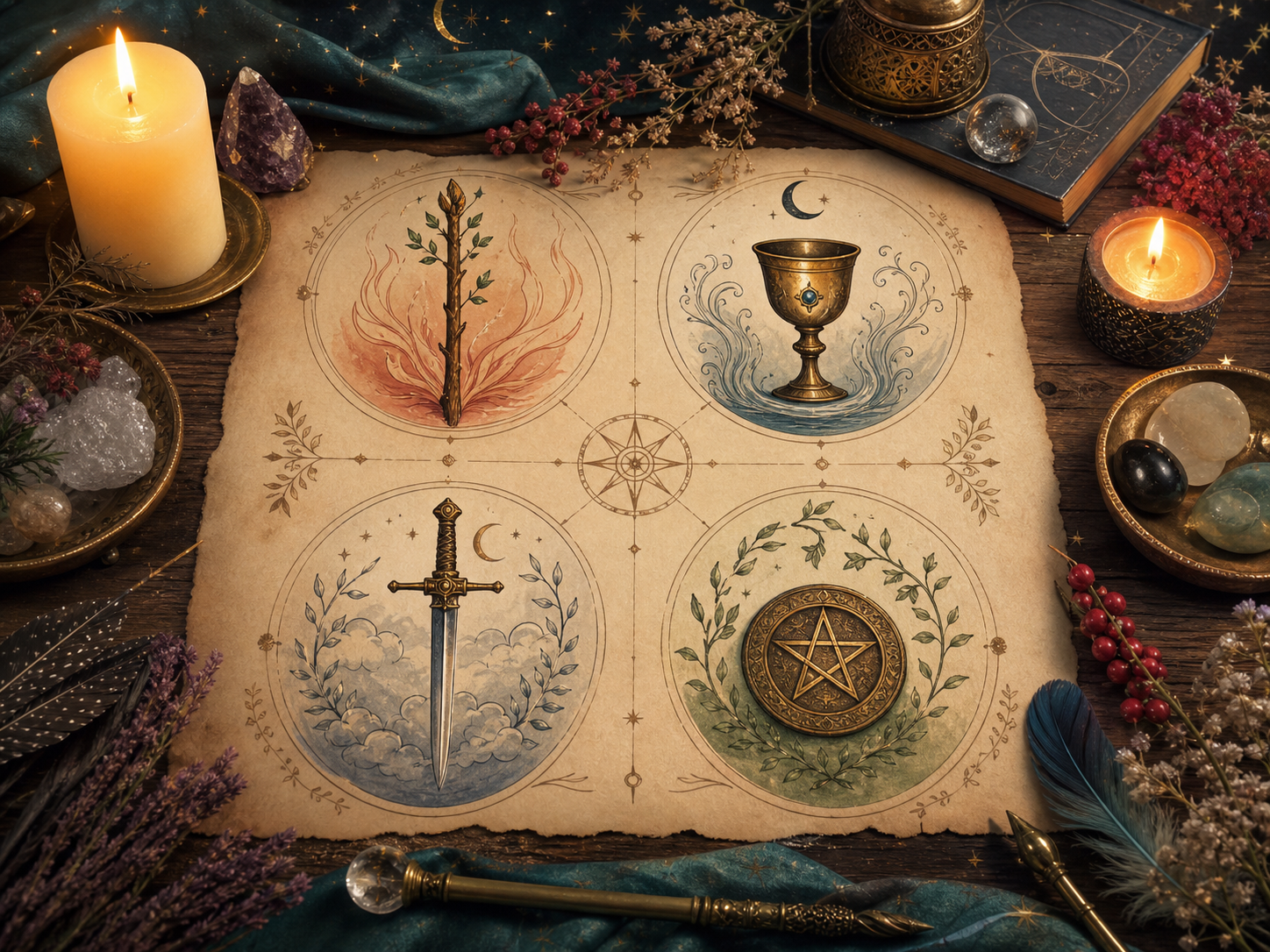
7 min read
Tarot Suits Meaning
Learn the spiritual meaning of Wands, Cups, Swords, and Pentacles through divine order, symbolism, and practical discernment.
Read articlePractice with one card
Ask a question, draw a card, and use the reading as the first entry in your tarot journal.