Updated
Using Tarot to Feel Close to Loved Ones Who Passed On
A grounded, God-first reflection on grief, tarot, and how communication with loved ones who passed on can happen through stillness, memory, signs, prayer, and the quiet truth of the heart.
Guide
9 min read
Grief listens through love
When someone you love has passed on, the heart does not stop reaching. It reaches through prayer, dreams, old photographs, sudden tears, familiar songs, repeated numbers, small coincidences, and the quiet sense that love has not been erased. Grief is not only pain. It is love learning how to live without the body it once touched.
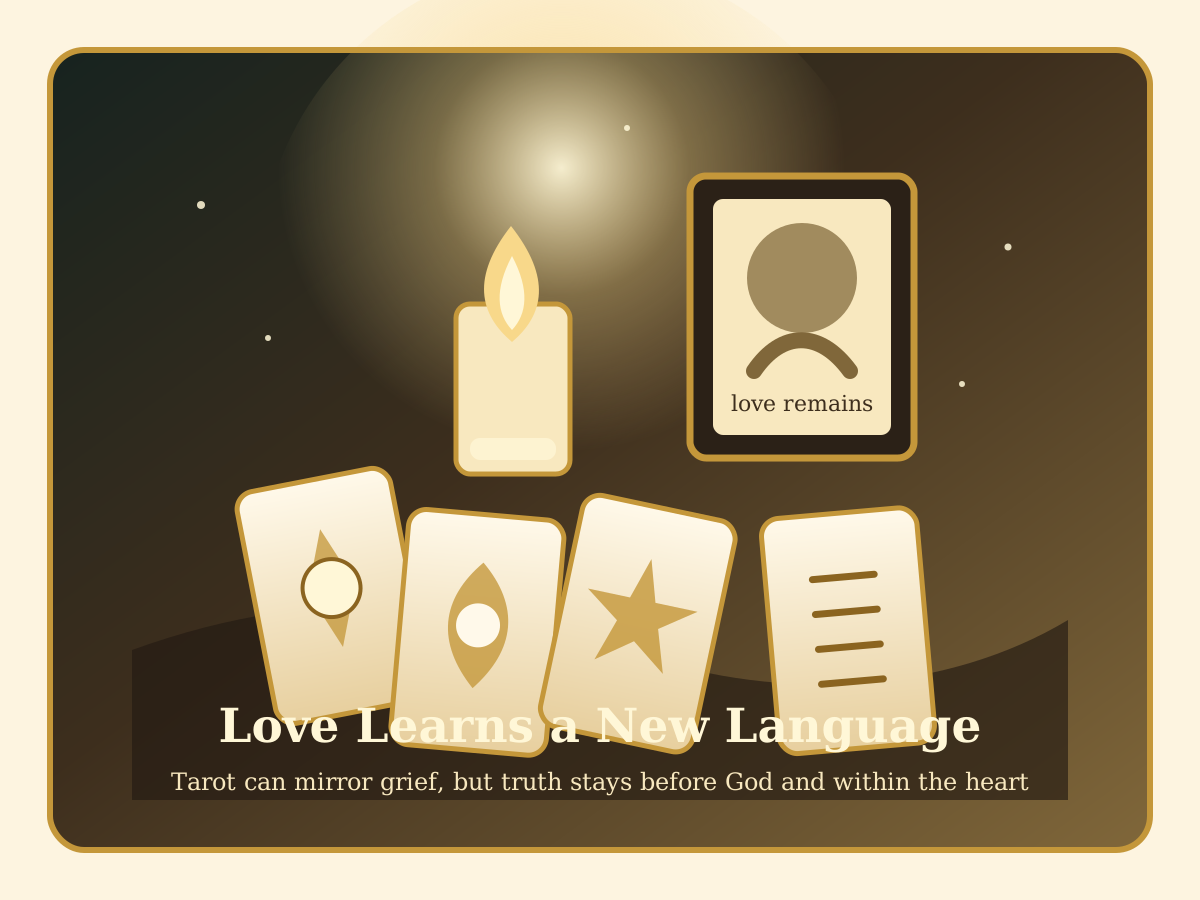
Tarot can be used in this tender place, but it must be used with humility. The cards are not God. The cards are not the person who passed on. They are not a machine that forces the unseen world to answer. At best, tarot becomes a symbolic mirror where grief, memory, intuition, and divine timing can meet in a slower way.
Communication happens in many forms
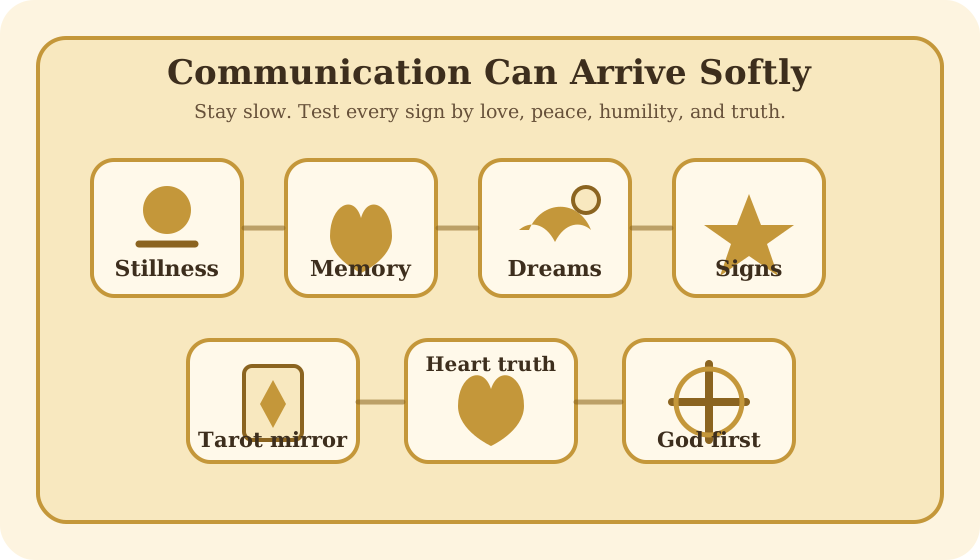
Spiritual communication is not always a dramatic voice, a clear dream, or a perfect sign. Sometimes it arrives as a sentence someone says without knowing why it matters. Sometimes it arrives as a song at the exact moment you are thinking of them. Sometimes it is a smell, a number, a bird outside the window, a childhood memory, a calm that appears after prayer, or a tarot card that names what your heart was already carrying.
God is not limited to one channel. Divine wisdom can move through silence, timing, symbols, people, scripture, nature, memory, and inner knowing. This does not mean every random event is a message. It means the soul should stay awake without becoming frantic.
Remain still and slow
Grief often wants certainty immediately. It wants one more sentence, one more apology, one more sign, one more proof that love is still alive somewhere beyond the visible world. That longing is human. But the more desperate the heart becomes, the easier it is to mistake noise for truth.
Before drawing a card, become still. Breathe. Pray if prayer is part of your life. Place both feet on the ground. Let the question soften. Do not rush to interpret every symbol. Stillness is not emptiness. Stillness is the place where the heart stops grabbing and begins listening.
Do not be blind in believing tarot
A tarot card can feel deeply accurate, especially when grief is raw. The Six of Cups may bring childhood memory. The Star may bring comfort. The Four of Swords may ask you to rest. Judgment may stir thoughts of reunion, forgiveness, and the soul beyond the body. These meanings can be powerful, but power is not the same as proof.
Do not be too blind in believing the card. Test the message by its fruit. Does it bring peace, humility, love, courage, forgiveness, and grounded action? Or does it create obsession, fear, dependency, and repeated checking? God does not ask you to surrender your conscience to cardboard. The truth has to be recognized in your heart.
Truth is in your heart
The heart is not the same as passing emotion. Emotion can surge and disappear. Fear can imitate intuition. Longing can invent certainty. But beneath the storm, there is often a deeper heart-knowing: a quiet recognition that does not need to shout.
Tarot may help you notice that knowing, but it does not own it. If a card seems to say, You were loved, the deeper truth is not created by the card. The card simply points toward love that already existed. If a card seems to say, Release guilt, the healing is not in the ink. The healing is in the mercy God is inviting you to receive.
Ask questions that care for grief
When reading tarot after loss, choose questions that protect your heart. Instead of asking, Are they here? ask, What part of my grief needs tenderness today? Instead of asking, What are they trying to prove? ask, What love remains with me? Instead of asking the same question until you get the card you want, ask, What is the next right way to honor this relationship?
Good grief questions do not turn the person who passed on into a spectacle. They help you carry love with responsibility. They make room for remembrance, apology, gratitude, forgiveness, rest, and a life that continues without betraying the one who died.
Let signs stay gentle
Some people receive dreams after a loved one passes. Some notice repeated numbers, meaningful timing, familiar songs, lights flickering, a phrase from a stranger, or a tarot card that seems to speak directly into the ache. Receive gentle signs with gratitude, but do not chase them until your whole life becomes a search for proof.
A real sign does not usually need to be squeezed. It comes with a quality of peace, clarity, and love. It does not demand that you abandon your life. It does not command you into fear. It does not make you helpless. It brings you back to what is true, and truth usually has a simple weight.
A simple remembrance tarot spread
If you want a gentle practice, use three cards: What love remains? What grief needs care? What next act honors them? Sit quietly before the draw. Speak the person's name if that feels right. Ask God for truth, protection, and peace. Then draw slowly.
Afterward, write what each card stirred in you before you look up meanings. Notice memories, body sensations, tears, resistance, relief, or gratitude. Then choose one grounded act: light a candle, write a letter, call someone, visit a place, forgive yourself, rest, donate, cook their favorite food, or simply live one ordinary day with more love.
When grief needs more than symbols
Tarot can help some people reflect, but grief also needs human care. If a reading leaves you more frightened, more dependent, or more unable to live, step away from the cards. Talk to someone trustworthy. Seek counsel from a grief therapist, pastor, spiritual elder, friend, or support group. There is no shame in needing help.
The person who passed on would not want your life to become a prison of signs. Love wants life to continue. Love wants you to eat, sleep, work, laugh again, cry honestly, remember with tenderness, and become more loving because you were loved.
A prayer-like closing
God of truth, mercy, and divine order, hold every grieving heart with tenderness. Let love continue without becoming obsession. Let signs remain gentle. Let tarot, dreams, memories, and moments point only toward what is honest, healing, and good.
Help me stay still and slow. Keep me from blind belief and from hardened disbelief. Teach me to hear truth in my heart, to honor the one who passed on, and to live in a way that carries love forward.
Gentle Ways to Read Tarot While Grieving
Use tarot slowly when grief is tender. The card should help you listen, not pressure you to prove contact.
| Practice | What it can reveal | Discernment reminder |
|---|---|---|
| Sit in silence first | Whether the question is coming from love, panic, longing, guilt, or peace. | A restless heart may need prayer and breath before it needs a card. |
| Ask one honest question | The feeling, memory, or unfinished truth asking for attention today. | Do not ask the same question repeatedly to force the answer you want. |
| Notice all forms of communication | Dreams, songs, repeated words, sudden memories, timing, people, and small events. | A sign should bring humility and love, not obsession or fear. |
| Read the card as a mirror | What your soul may already know but has been too overwhelmed to name. | Tarot is not absolute proof. Truth must be tested in the heart before God. |
| Close with care | One grounded act of remembrance, forgiveness, gratitude, or rest. | Grief needs gentleness, wise support, and daily life, not only symbols. |

Written by
Lucia Aurelia
Tarot educator and symbolic reflection writer
Lucia Aurelia writes about tarot as a reflective language for symbols, questions, journaling, and grounded spiritual practice.
Common Questions
Using Tarot to Feel Close to Loved Ones Who Passed On FAQ
Can tarot prove that a loved one who passed on is communicating?
No. Tarot should not be treated as absolute proof of spiritual contact. It can be a symbolic mirror that helps you listen to grief, memory, love, prayer, timing, and the quiet truth already moving in your heart.
Is it wrong to use tarot when grieving someone who died?
It depends on the heart and the practice. If tarot replaces God, conscience, prayer, wise counsel, or practical care, it becomes unhealthy. If it is used humbly as reflection, it can help some people name grief and return to love.
What question should I ask tarot about someone who passed away?
Ask gentle questions such as: What part of my grief needs care today? What love remains with me? What truth in my heart am I ready to hear? Avoid questions that demand proof, control, or repeated confirmation.
What if tarot makes my grief worse?
Stop the reading, breathe, pray, and return to ordinary support. If grief feels unbearable, reach out to a trusted person, counselor, faith leader, local crisis line, or emergency help in your area.
More From The Blog
Continue reading tarot education.

8 min read
Hidden in Plain Sight: Tarot, Secrets, and Spiritual Discernment
Important truths are sometimes hidden by distraction, jokes, confusion, and devaluation. Learn how tarot can train discernment without becoming paranoid.
Read article
9 min read
Is God Real? Why an Imperfect World Does Not Disprove God
A spiritual reflection on why war, sickness, crime, and suffering do not automatically disprove God, and how polarity makes human experience possible.
Read articlePractice with one card
Ask a question, draw a card, and use the reading as the first entry in your tarot journal.